No items found.

Blog
Faster, Smarter, Cheaper: The AI Tools Reshaping Market Research

Riddhi Patel
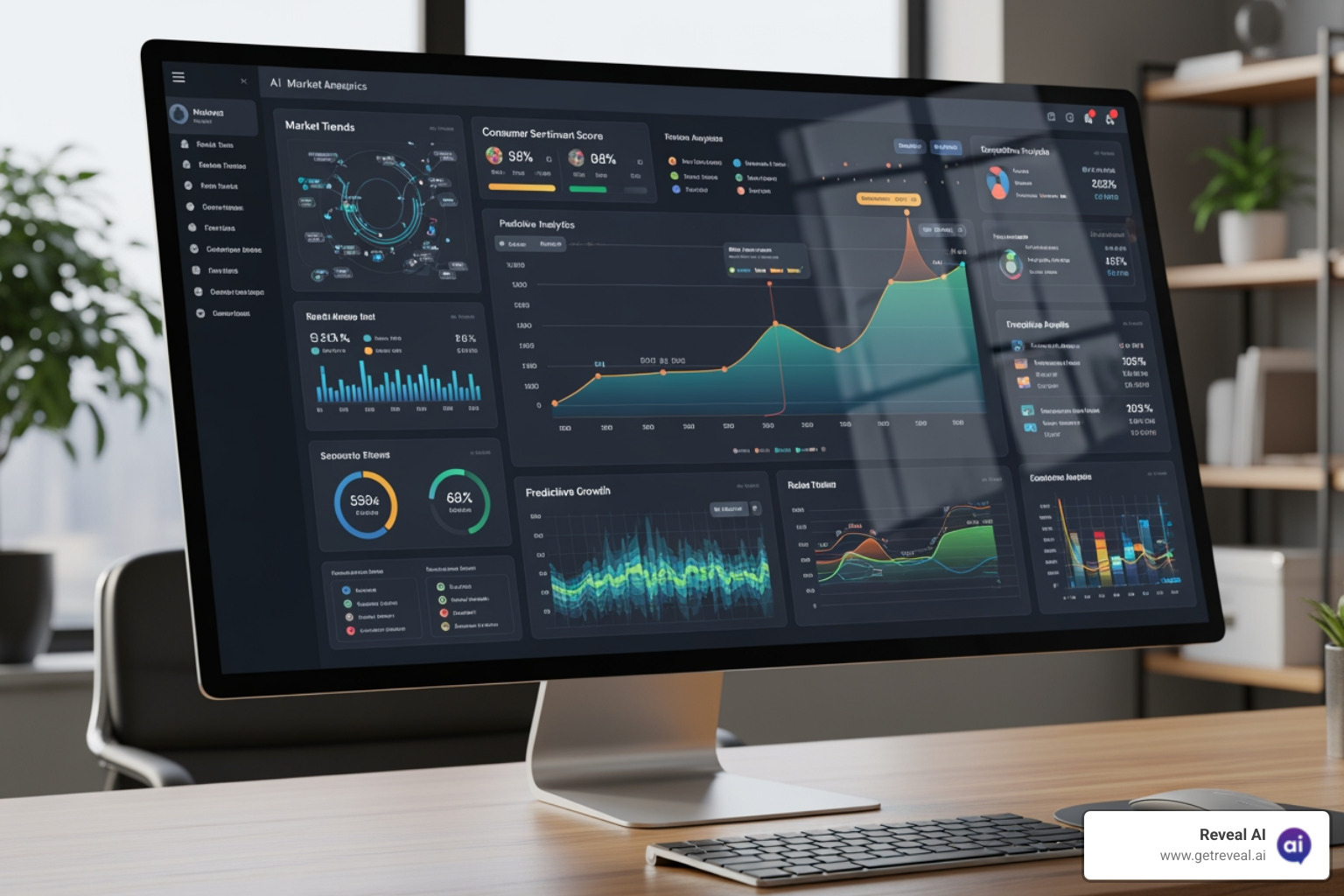

AI enabled market research is fundamentally changing how businesses gather, analyze, and act on customer insights. The days of waiting weeks or months for research results are ending.
What AI Enabled Market Research Delivers:
Custom market research has always been slow and costly. A single qualitative study could take weeks for analysis, while a comprehensive market assessment required months and a significant budget.
But the ground is shifting. With over 2.5 quintillion bytes of data generated daily, traditional methods can't keep pace. Investment firms like Andreesen Horowitz and Foundation Capital predict generative AI will transform the $140 billion global market research industry.
The change is already happening. Research teams using purpose-built AI platforms report their organizations depend on research significantly more than a year ago. Analysis that once took weeks now happens in hours. But here's the critical distinction: not all AI research tools are created equal.
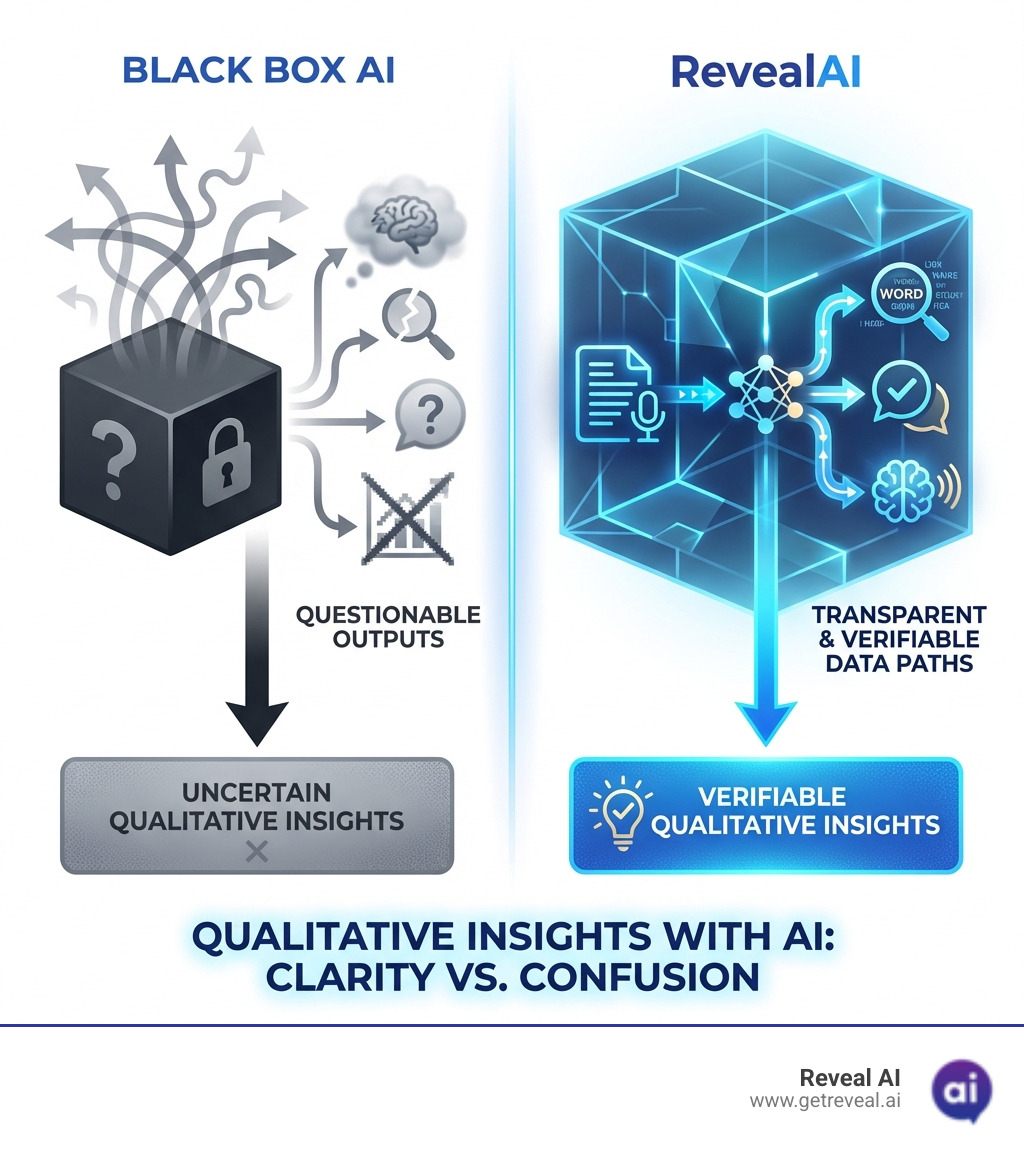
Generic AI tools like ChatGPT offer speed but introduce serious risks: hallucinations, no source attribution, and unverifiable insights. For researchers whose reputations depend on accuracy, these trade-offs are unacceptable.
This is where AI-powered qualitative research platforms like RevealAI enter the picture. These platforms deliver the speed and scale of AI while maintaining research-grade standards: verifiable insights, direct quote attribution, and transparent methodology that builds client trust rather than eroding it.
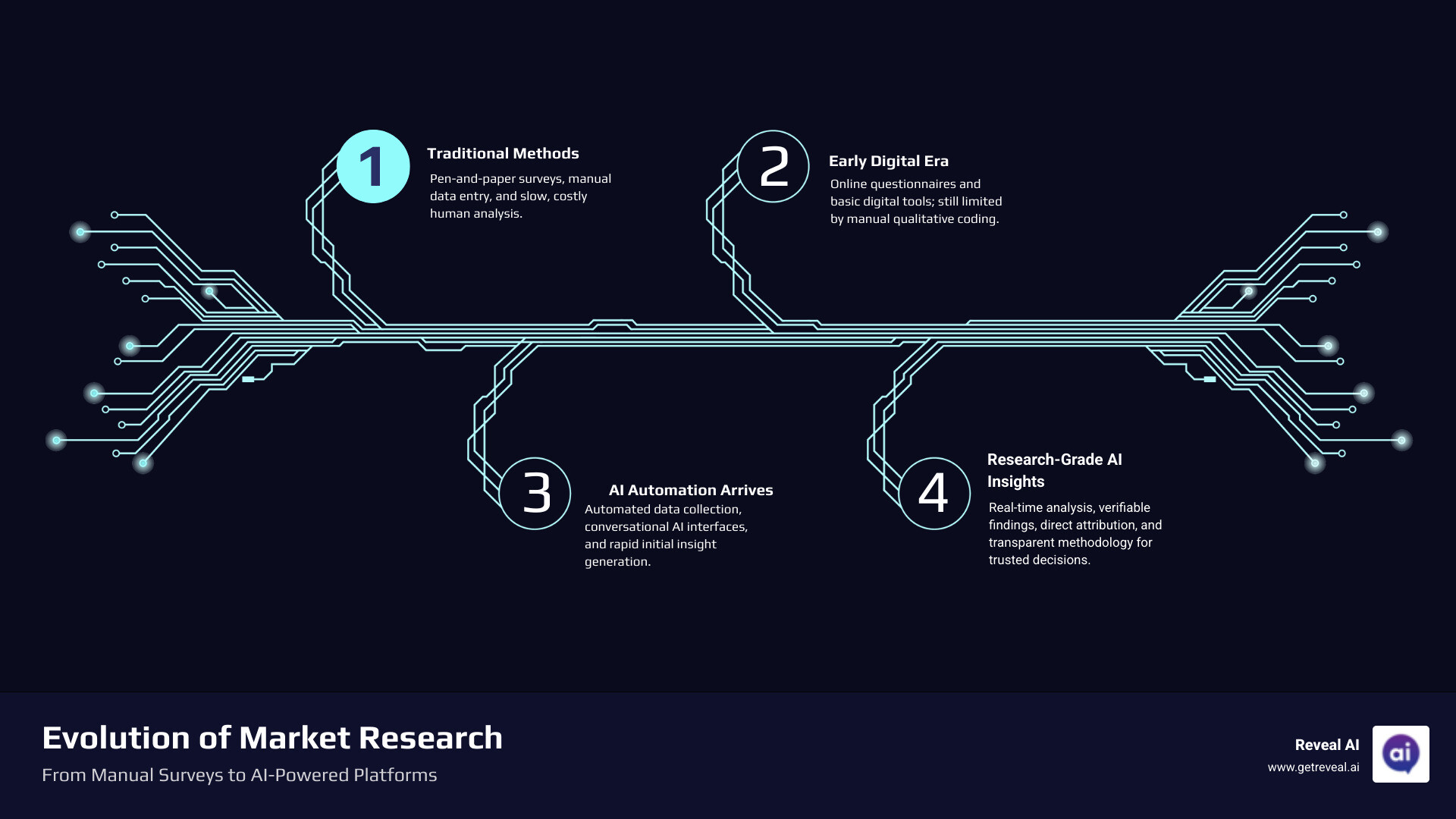
The shift to AI enabled market research is more than just an upgrade; it's a fundamental rethinking of how we approach understanding our customers and markets. This new paradigm directly addresses the limitations of traditional methods, offering unparalleled speed, scale, and depth.
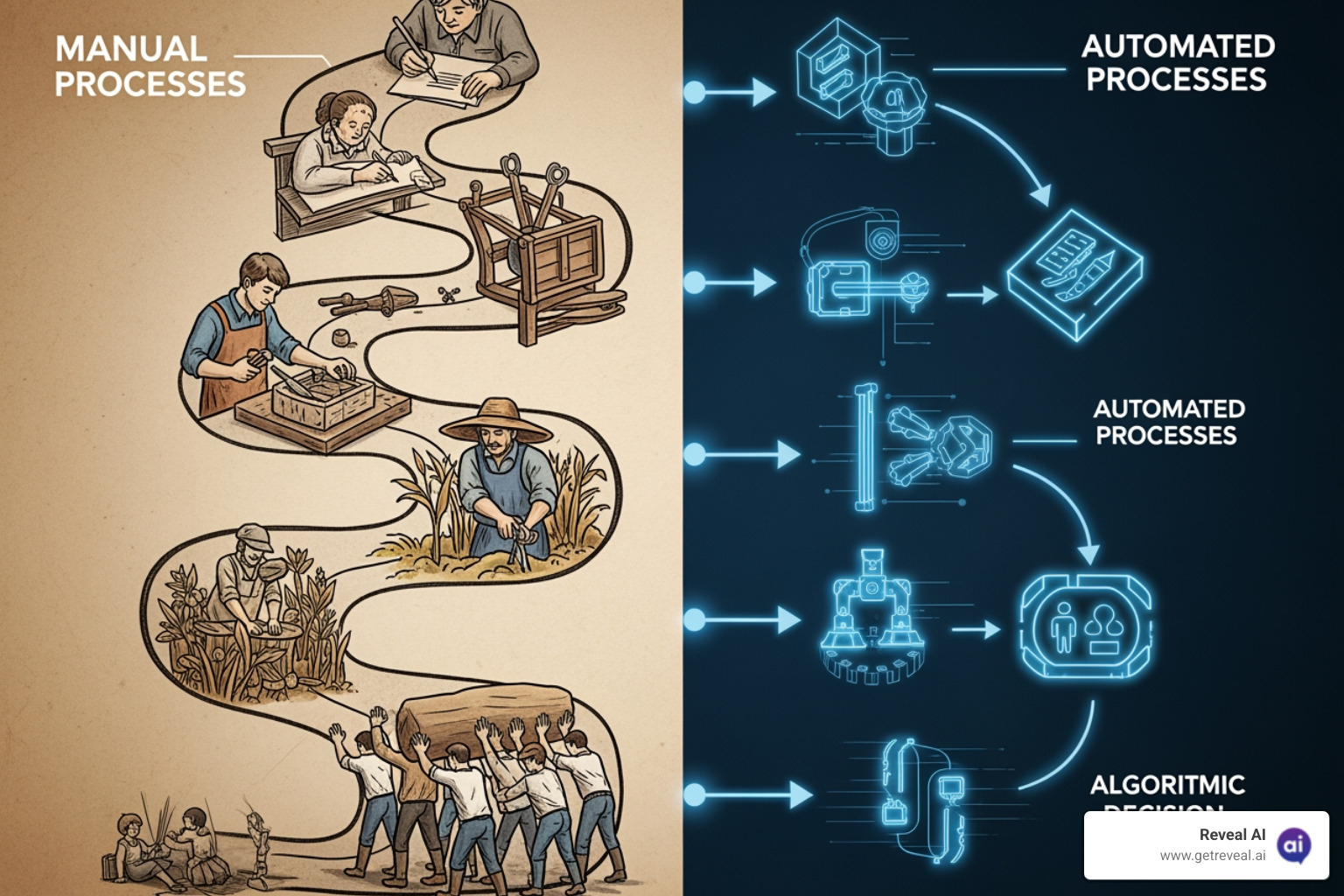
Traditional market research involves time-consuming manual processes. From data collection to qualitative coding, each step can take weeks or months, meaning insights risk being outdated upon delivery.
AI-powered qualitative research platforms radically transform this workflow by automating slow processes. Tasks that took weeks now take hours; for example, qualitative analysis time can be reduced by up to 80%, open uping significant team efficiency.
Our AI research platform, RevealAI, exemplifies this shift. It enables:
The benefits extend beyond just speed. AI-powered platforms offer unprecedented scale, analyzing datasets 100 times larger than traditional methods without proportional cost increases. This makes sophisticated market research accessible and cost-effective, potentially reducing primary research costs by 30-50%. This exponential efficiency allows research teams to focus on higher-level interpretation and strategic application, rather than getting bogged down in manual tasks.
To learn more about how our platform revolutionizes the research process, explore More info about our Product.
Generative AI (Gen AI) is a disruptive force in AI enabled market research. It can produce original content by learning from extensive datasets, allowing us to move beyond analyzing existing data to creating new research possibilities.
The applications of Gen AI are diverse and powerful:
However, generic Gen AI creates a "trust gap." These tools are prone to "hallucinations" (plausible but false information) and lack source attribution, making insights impossible to verify. For research professionals, this lack of verifiability is a deal-breaker, as strategic decisions depend on reliable, attributable data.
This is where RevealAI’s research-grade approach stands apart. We prioritize verifiable insights, direct attribution, and transparency, ensuring that the AI-generated data our clients receive is trustworthy and actionable. Our platform is purpose-built for market research, providing the depth and speed of AI without compromising the integrity of your research.
For a deeper dive into understanding your customers, visit our Customer Research page.
While the benefits of AI enabled market research are undeniable, integrating AI tools also presents significant challenges. Ethical concerns, data privacy, and algorithmic bias are paramount for maintaining research integrity.
Ethical Considerations and Data Privacy:AI relies on vast amounts of data, making ethical data collection and usage paramount. Data privacy regulations, such as the General Data Protection Regulation (GDPR), underscore the importance of protecting personal information. This means ensuring any data used by AI tools adheres to strict privacy standards.
RevealAI's 'Walled Garden' data integrity model ensures security. Unlike generic tools using unverified web data, our platform operates in a controlled environment. We don't use web data for analysis, keeping client data confidential and mitigating the risks of public LLM tools.
Algorithmic Bias:A major concern with any AI system is algorithmic bias. If not carefully managed, bias in training data can produce misleading insights. For example, some AI models reflect opinions of certain demographics more than others.
To mitigate this, it's essential to:

Purpose-Built vs. Generic AI:The distinction between purpose-built and generic AI is critical. Teams using basic AI are four times more likely to lose organizational influence than those using purpose-built tools. This highlights the growing need for specialized AI embedded directly in research software. RevealAI's platform is engineered to be research-grade, with built-in guardrails that ensure trust and verifiability.
Effective Implementation:Implementing AI effectively requires a structured approach. We recommend a phased framework:
Engaging relevant teams from the start is crucial. It’s also vital to foster an environment where teams question AI outputs and apply domain expertise, preventing overreliance on automation.
For a deeper understanding of how to responsibly integrate AI into your research, refer to our guide on Leveraging AI in Market Research.
The change brought by AI enabled market research is not just about incremental improvements; it's about fundamentally redefining what's possible. For market research firms and product teams, embracing this shift isn't an option—it's a strategic imperative for competitive advantage.
The return on investment (ROI) for adopting AI in market research is compelling. AI-powered qualitative research platforms deliver measurable value across several key metrics:
MetricTraditional ResearchAI-Enabled Research (RevealAI)Time to InsightWeeks to MonthsHours to Days (Up to 80% reduction in qualitative analysis time)Cost per ProjectHighSignificantly Lower (30-50% reduction in primary research costs with synthetic data)Data ScaleLimitedVast (Analyzes datasets 100x larger without proportional cost increases)Decision ConfidenceLagging/Periodic InsightsReal-time, continuous insights (Up to 85% accuracy with synthetic data, 20% improvement)
This translates into a powerful business case:
By automating qualitative analysis and providing conversational surveys, RevealAI empowers market research firms and product teams to achieve a level of audience intelligence that was previously unattainable. Explore how we can improve your Audience Intelligence.
The journey of AI enabled market research is still unfolding, with emerging trends promising further revolution. The future of research is faster, more efficient, and deeply integrated.
At RevealAI, we believe in the "Trust First" imperative. As AI capabilities expand, the need for verifiable, research-grade AI becomes even more critical. We are committed to developing solutions that not only accept these emerging trends but also provide the guardrails necessary to ensure accuracy, attribution, and transparency.
To understand how advanced AI clustering can improve your research, read about Why Multi-Level AI Clustering is a Game-Changer for Market Research.
The landscape of market research has shifted, driven by AI enabled market research. We've moved from slow, costly research to an era of speed, scale, and continuous intelligence. The ability to cut analysis time by 80%, analyze 100x larger datasets, and reduce costs by 30-50% alters the competitive playing field.
However, the proliferation of AI tools presents a critical choice. Generic AI offers speed but comes with risks like hallucinations, no source attribution, and unverifiable insights. For professionals making strategic decisions, these risks are unacceptable, as adopting the wrong AI can erode trust and lead to flawed choices.
This is why trust and verifiability are paramount. RevealAI’s philosophy is "Trust first, not novelty first." Our research-grade AI platform ensures verifiable insights through direct quote attribution and transparent methods. Our 'Walled Garden' data model keeps your data secure.
By partnering with RevealAI, you empower your research teams to move faster, gain deeper insights, and make more confident decisions—all without sacrificing the integrity and trustworthiness that define exceptional market research. Accept the future of market research with confidence.
For a step-by-step approach to implementing a trusted AI strategy, explore our Market Research Guide.