
No items found.
Why Your Survey Data Needs More Than a Spreadsheet

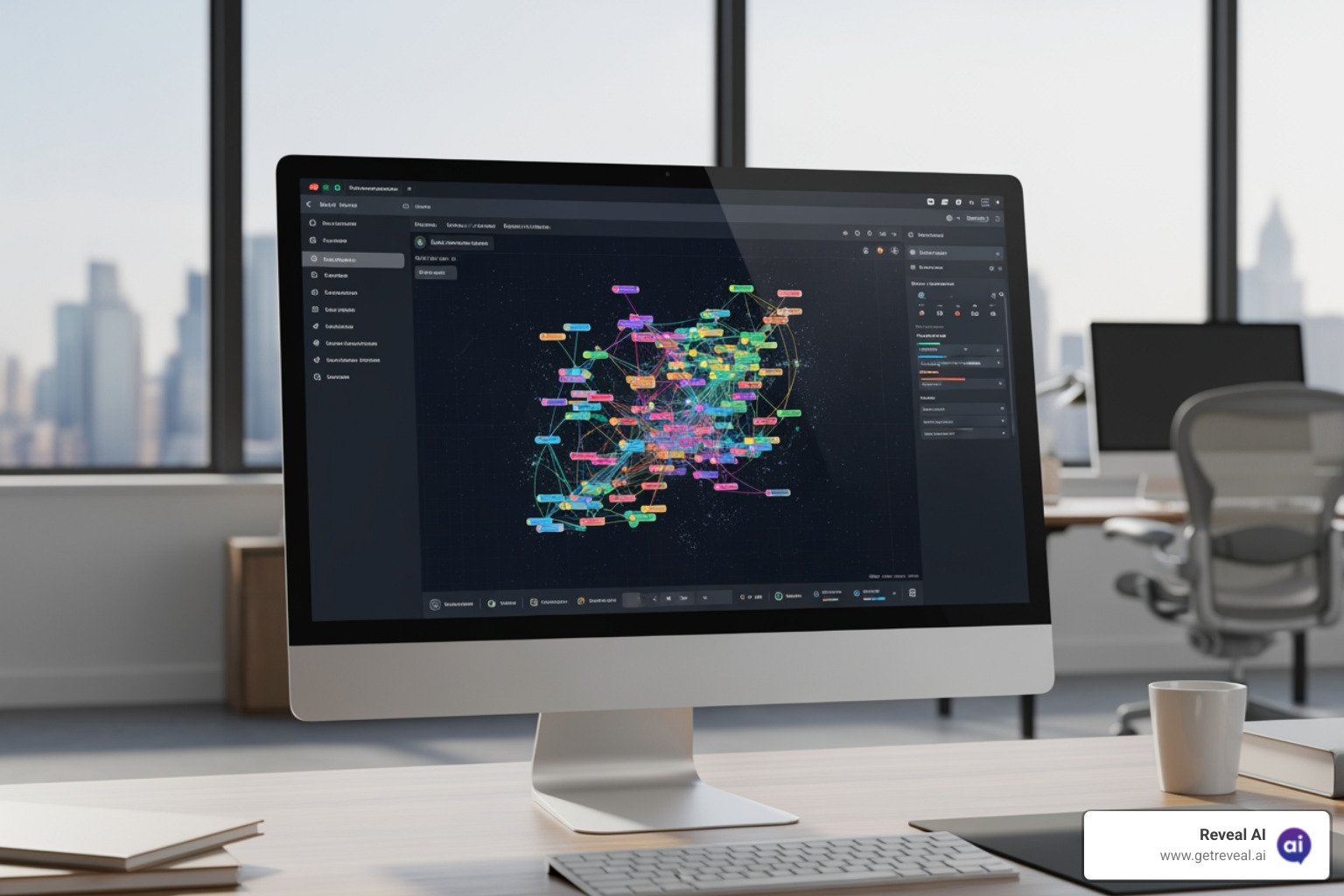
Survey analysis software helps organizations turn raw survey responses into clear, actionable insights by automating data cleaning, statistical analysis, and text interpretation. Here's what makes these tools essential:
- Speed: AI-powered platforms can analyze 500 open-ended responses in minutes vs. 20+ hours manually
- Depth: Advanced text analytics uncover themes and sentiment that spreadsheets miss
- Accuracy: Automated statistical testing eliminates human error in data interpretation
- Scale: Handle thousands of responses across multiple surveys simultaneously
- Collaboration: Share insights across teams with interactive dashboards and reports
Most teams claim to "know their customers," but when product adoption stalls or messaging falls flat, they realize they've been working off assumptions. The problem isn't collecting feedback—it's analyzing it fast enough to make decisions that matter.
Traditional spreadsheets work fine for small surveys with mostly quantitative data. But when you're dealing with hundreds of open-ended responses, complex cross-tabulations, or need to spot patterns across multiple surveys, manual analysis becomes a bottleneck.
The tools to analyze all this data are powerful, complex and require specific expertise to set up. Where a manual analysis of 500 open-ends might take a researcher 20+ hours, an AI-assisted tool can categorize, visualize, and summarize the same data in just a few minutes.
That's the difference between insights that inform next quarter's strategy and insights that inform tomorrow's decisions.
Why Spreadsheets Aren't Enough: The Case for Specialized Software
We've all been there: a spreadsheet brimming with survey responses, promising insights but delivering a headache. While familiar spreadsheet programs are excellent for basic data entry and simple calculations, they quickly fall short when it comes to comprehensive survey analysis software.
Here's why relying solely on spreadsheets for survey analysis is like trying to build a skyscraper with a hammer and nails:
- Manual Analysis & Human Error: Imagine manually coding 500 open-ended responses. It's not just tedious; it's prone to human bias and inconsistencies. What might take a researcher 20+ hours to analyze manually, an AI-assisted tool can process, categorize, visualize, and summarize in minutes. This dramatically reduces the chance of errors and frees up valuable time.
- Scalability Issues: As survey volumes grow, spreadsheets buckle under the pressure. Thousands of rows of messy data become unmanageable, making it nearly impossible to identify patterns or trends efficiently.
- Time Consumption: The "grunt work" of survey analysis—data cleaning, weighting, filtering, cross-tabulations—is incredibly time-consuming in spreadsheets. Specialized platforms offer automation tools at each of these stages, dramatically cutting down the time we spend analyzing surveys.
- Lack of Advanced Statistics: Spreadsheets offer basic functions like means, counts, and sums. But for deeper understanding, we need advanced statistical tests like significance testing, regression analysis, or factor analysis. These are either impossible or incredibly complex to perform accurately in a general-purpose spreadsheet.
- Cross-Tabulation Challenges: While pivot tables can help, complex cross-tabulations across multiple variables are cumbersome and often require significant manual manipulation in a spreadsheet.
- Significance Testing: Determining if differences in our data are statistically meaningful is crucial for making confident decisions. Spreadsheets lack integrated tools for this, leaving us guessing or requiring external statistical packages.
- Limitations of General-Purpose Tools: Spreadsheets aren't designed for the nuances of survey data, such as handling multiple response questions or integrating with other survey collection platforms. They force us to export raw data into formats that are often difficult to work with.
The evolution of market research demands more. We need solutions that can transform raw data into strategic, actionable, and business-oriented insights, especially as the global online survey software market grows. Specialized survey analysis software is no longer a luxury; it's a necessity for any organization serious about data-driven decision-making.
Key Features to Look for in Survey Analysis Software
Choosing the right survey analysis software can feel like finding a needle in a haystack, but focusing on key features helps us narrow down the options. We look for tools that don't just process data but genuinely help us understand our customers and markets better.

When evaluating platforms, consider these core functionalities and how they streamline your workflow:
Quantitative vs. Qualitative Analysis
Effective survey analysis requires handling both the "what" and the "why" of our data.
- Quantitative Analysis: This is about the numbers. We need software that excels at processing numerical data from multiple-choice, rating scale, and demographic questions. Key features here include:
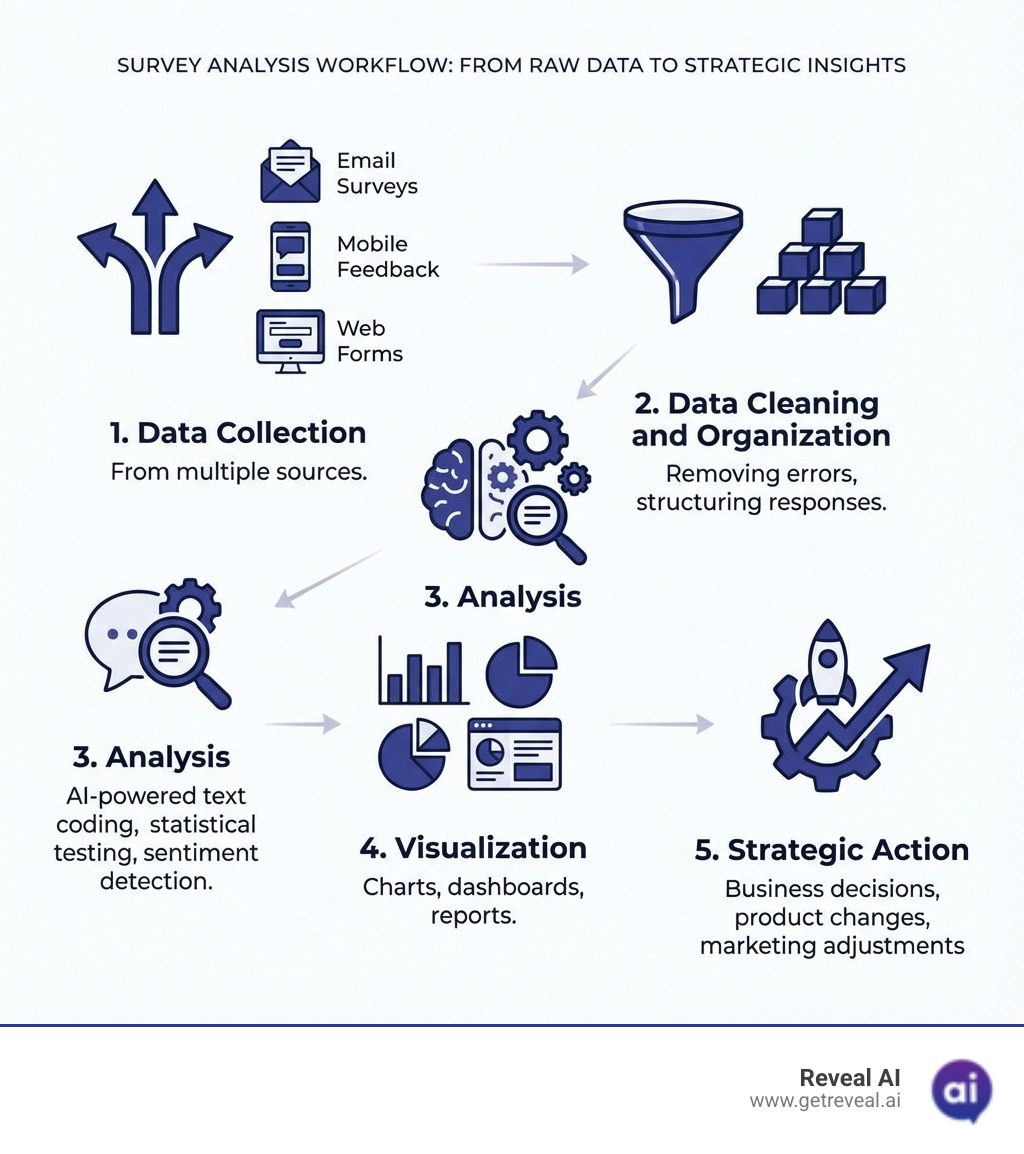
- Data Cleaning and Preparation: Automatically identifying and correcting errors, handling missing data, and structuring information.
- Segmentation and Filtering: Easily breaking down responses by demographics or specific criteria to uncover targeted insights.
- Cross-Tabulation: Analyzing relationships between two or more variables.
- Statistical Modeling: Performing advanced statistical tests to determine correlations, significance, and predictive analytics.
- Qualitative Analysis: This digs into the rich, nuanced text from open-ended responses. It helps us understand the emotions, motivations, and detailed feedback that numbers can't convey. We look for:
- Text Analytics: Tools that can process large volumes of unstructured text.
- Thematic Analysis: Automatically identifying recurring themes and topics within responses.
- Sentiment Analysis: Gauging the emotional tone (positive, negative, neutral) of feedback.
- Coding: Assigning labels or codes to segments of text for systematic organization and retrieval.
Our goal is to understand not just what happened, but why it happened, linking numerical trends to the stories behind them.
The Power of AI and Machine Learning
AI and machine learning are revolutionizing survey analysis software, making it faster, deeper, and more objective. This is particularly transformative for handling the often overwhelming volume of open-ended responses.

- Automated Theme Findy: Instead of manually sifting through hundreds or thousands of comments, AI-driven tools can group them into meaningful themes in minutes. This drastically cuts down analysis time. For example, we've seen how AI can process 500 open-ended responses in just a few minutes, a task that would traditionally take a researcher 20+ hours.
- Sentiment Analysis & Emotion Detection: AI can automatically detect the emotional tone of responses, identifying positive, negative, or neutral sentiments. This is incredibly valuable for catching early warning signs of churn from customer comments or understanding employee morale.
- Speeding Up Insights: The ability to automate these complex tasks means we can get insights 5x faster and with an astounding 82% less manual labor. This allows us to move from data collection to strategic action in record time.
- Reducing Manual Labor & Bias: By automating the categorization and analysis of qualitative data, AI not only saves time but also helps reduce human bias, leading to more objective and reliable insights. It frees up our researchers to focus on strategic thinking rather than tedious coding.
- Leveraging AI for Deeper, Faster Insights: AI-powered features allow us to automatically summarize insights, detect emotions, and cluster related feedback from survey data. This ensures we don't miss critical patterns and can act on them swiftly.
Data Visualization and Reporting
Once we've analyzed our data, the next critical step is to communicate those insights effectively. Powerful data visualization and reporting features are essential for changing complex findings into clear, compelling narratives that resonate with stakeholders.
- Interactive Dashboards: We look for tools that allow us to create dynamic, customizable dashboards. These should enable stakeholders to explore the data themselves, drilling down into specific segments or trends through visually compelling and interactive interfaces.
- Customizable Charts and Graphs: A diverse library of chart types (bar charts, line graphs, scatter plots, word clouds, etc.) helps us present our data in the most impactful way. The ability to customize colors, labels, and layouts ensures brand consistency and clarity.
- Data Storytelling: Good software helps us build compelling data stories fast. This means not just displaying data, but guiding the audience through the insights, highlighting key findings, and connecting them to business outcomes.
- Exporting to PowerPoint and Excel: Seamless integration and export options are crucial for sharing reports with various teams. The ability to automatically update PowerPoint reports with fresh data is a huge time-saver.
- Real-Time Reporting: In today's environment, real-time analytics are invaluable. We need to monitor key metrics and spot trends as they emerge, allowing for agile decision-making.
A Guide to Different Types of Survey Analysis Platforms
The landscape of survey analysis software is diverse, offering solutions custom to various needs, budgets, and technical expertise. Understanding the different categories helps us find the perfect fit for our organization.
All-in-One Experience Management (XM) Platforms
These comprehensive platforms are designed for large organizations that need to manage and analyze experiences across all touchpoints – customers, employees, products, and brands. They go beyond basic survey analysis to offer a holistic view of experience data.
- Comprehensive Suites: These platforms integrate survey creation, data collection, advanced analytics, and reporting into a single ecosystem. They often include features for customer journey mapping, employee feedback, and product development insights.
- AI-Driven Analytics: Many XM platforms leverage AI for predictive intelligence, helping organizations understand not just what happened, but what is likely to happen and why.
- Enterprise-Level Security: Given the sensitive nature of experience data, these platforms offer robust security, compliance, and governance features essential for large corporations.
Specialized Qualitative and Text Analysis Tools
For organizations where understanding the "why" behind customer behavior is paramount, specialized qualitative and text analysis tools are indispensable. These platforms excel at dissecting unstructured data from open-ended survey questions, interviews, and other text sources.
- Deep Text Analysis: These tools are built to analyze large volumes of text, identifying themes, sentiments, and patterns that would be impossible to uncover manually. They help us go beyond quantitative data analysis to open up behaviors and emotions.
- Unstructured Data Mastery: They handle various forms of unstructured data, from survey comments to social media posts, changing them into actionable insights.
- AI-Powered Coding: Many of these tools leverage AI and machine learning to automate the coding process, grouping similar responses and suggesting categories. This significantly speeds up qualitative analysis and reduces bias.
- Identifying Patterns and Trends: By systematically organizing and analyzing text, these tools help us pinpoint emerging trends, customer pain points, and areas of satisfaction.
Our own platform, Reveal AI, provides an AI-powered solution that transforms customer voices from conversational surveys into business decisions rapidly. We specialize in automated qualitative analysis, offering deeper insights and faster decisions in market and customer research. This allows us to truly open up the "why" behind our data.
Advanced Statistical Analysis Capabilities
For researchers, academics, and data scientists who require rigorous statistical validation and complex modeling, specialized statistical software is the go-to solution.
- Advanced Statistical Modeling: These tools offer a wide array of statistical techniques, including regression analysis, multivariate analysis, factor analysis, and more. They are designed for in-depth quantitative research.
- For Researchers and Academics: Certain platforms are well-known in academic and scientific circles for their powerful statistical capabilities, allowing for complex hypothesis testing and data manipulation.
- Hypothesis Testing: They provide the functionality to test hypotheses with statistical significance, ensuring that our findings are robust and reliable.
- Custom Analytics: Users can often write custom scripts (e.g., in R or Python) within these environments to perform highly specialized analyses. While powerful, these tools often require a higher level of technical expertise.
Frequently Asked Questions about Survey Analysis Software
Navigating survey analysis software can raise many questions. Here, we address some of the most common inquiries to help you make informed choices and maximize your data's potential.
If you are new to survey methodology in general, resources like the Survey methodology overview on Wikipedia can be a helpful starting point for understanding core concepts that underpin modern survey analysis tools.
What are the benefits of dedicated survey analysis software?
The shift from general tools to dedicated survey analysis software brings a wealth of advantages that directly impact our ability to make data-driven decisions:
- Increased Speed: As we've seen, AI-driven tools can process open-ended responses in minutes, dramatically accelerating the entire analysis process. This means insights are available 5x faster, allowing for more agile responses to market changes or customer needs.
- Reduced Errors: Automation minimizes the risk of human error inherent in manual data cleaning, coding, and statistical calculations. This leads to more reliable and trustworthy results.
- Deeper Insights: Specialized software can uncover hidden patterns, subtle sentiments, and complex correlations that might be missed by general tools. This depth of understanding provides a richer context for decision-making.
- Better Data Quality: Many platforms offer features for data validation and cleaning, ensuring that we're working with the most accurate and consistent data possible.
- Scalability: Dedicated software is built to handle large volumes of data, making it suitable for growing organizations and extensive research projects. It can process thousands of responses across multiple surveys with ease.
- Automation Benefits: Beyond speed, automation frees up our researchers from repetitive tasks, allowing them to focus on higher-value activities like strategic interpretation and action planning. The ability to achieve insights with 82% less manual labor is a game-changer for efficiency.
How is AI changing survey analysis, especially for open-ended questions?
AI and machine learning are fundamentally changing how we approach survey analysis, particularly for the rich, nuanced data found in open-ended responses. This is where AI truly shines, offering capabilities that were once unimaginable or incredibly labor-intensive:
- Automated Coding and Thematic Grouping: AI can read and understand vast amounts of text, automatically identifying key themes and grouping similar responses. What once took hours or even days of manual coding can now be done in minutes. This means we can quickly see what topics are most prevalent in customer feedback or employee comments.
- Sentiment and Emotion Detection: AI algorithms can analyze text to determine the underlying sentiment (positive, negative, neutral) and even detect specific emotions. For example, a SaaS company might use automated sentiment analysis to catch early warning signs of churn from NPS comments, or a healthcare provider could analyze patient satisfaction surveys across demographics to uncover gaps in care.
- Bias Reduction: By processing data objectively, AI helps to minimize human bias in the interpretation of qualitative data, leading to more impartial and accurate insights.
- Freeing Up Researchers for Strategic Work: With AI handling the heavy lifting of data processing and initial theme identification, our research teams can dedicate more time to strategic thinking, delving deeper into the "why" behind the data, and formulating actionable recommendations. This aligns perfectly with agile research for innovation, allowing us to pivot quickly based on real-time insights.
How do I choose the right survey analysis software for my business?
Selecting the ideal survey analysis software is a critical decision that impacts our research capabilities and overall business outcomes. Here's a practical approach to help us choose wisely:
- Assess Your Needs: Start by defining what kind of insights you need. Are you primarily focused on quantitative metrics, deep qualitative understanding, or a blend of both? Do you need to track customer sentiment, measure employee engagement, or validate product ideas? Clarifying your specific goals will guide your feature requirements.
- Consider Data Types: What kind of data are you collecting? If you have a high volume of open-ended responses, strong text analytics and AI capabilities are crucial. If your surveys are mostly quantitative, look for robust statistical analysis tools.
- Evaluate Technical Expertise: How tech-savvy is your team? Some advanced statistical software requires specialized training, while user-friendly platforms offer intuitive drag-and-drop interfaces and no-code solutions. We want a tool that empowers our team, not intimidates them.
- Budget Considerations: Survey analysis software ranges from free basic tools to enterprise-level platforms with significant investment. Determine your budget and look for solutions that offer the best value for your specific needs. Remember to factor in potential ROI from faster insights and improved decision-making.
- Focus on Desired Outcomes: What measurable results do you expect from the software? Whether it's reducing churn, improving product satisfaction, or increasing employee retention, ensure the platform's features directly support these outcomes.
- Scalability for Future Growth: Will the software grow with your needs? Consider if it can handle increasing volumes of data, integrate with new data sources, and support an expanding team. The global online survey software market is a $3.2 billion industry with a compound annual growth rate of 14.6%, so choosing a scalable solution is key to not missing the next big strike.
Conclusion: Turning Your Data into a Strategic Asset
We've explored the essential role of survey analysis software in today's data-driven world, moving beyond the limitations of spreadsheets to open up deeper, faster, and more accurate insights. From automated data cleaning and advanced statistical modeling to the transformative power of AI in understanding open-ended responses, these tools are indispensable for any organization aiming to make informed decisions.
The benefits are clear: increased speed, reduced errors, profound insights, superior data quality, and the scalability to grow with our ambitions. AI and machine learning, in particular, are reshaping the landscape, turning complex qualitative data into actionable intelligence in minutes, not hours, and freeing our teams for strategic innovation.
Choosing the right platform involves a careful assessment of our specific needs, data types, team expertise, and budget, always with an eye on the desired outcomes and future scalability.
At Reveal AI, we are committed to helping organizations harness the full power of their customer voices. Our AI-powered platform for conversational surveys transforms customer insights into business decisions rapidly, offering automated qualitative analysis that delivers deeper understanding and faster actions in market and customer research.
To truly open up the "why" behind your data with conversational AI and automated qualitative analysis, explore how you can transform your Market Research. For more information and resources, visit our Resources page.