Get The Latest Insights, Tips, And Updates - Straight to Your Inbox.
Thank you! Your submission has been received!
Oops! Something went wrong while submitting the form.
The Shift from Periodic Reports to Continuous Insight
Real time employee feedback is changing how organizations capture insights from their people—and this same revolution is reshaping market and product research. For researchers, the principles behind real-time employee feedback offer a powerful blueprint: move from static, periodic reports to continuous, actionable dialogue with users.
Key aspects of real-time feedback for researchers:
Speed: Captures insights as they happen, not weeks later
Depth: Uses conversational, open-ended approaches to understand the "why"
Accuracy: Reduces recency bias by gathering feedback continuously
Action: Enables teams to respond and iterate immediately
Trust: Requires verifiable, attributed insights—not generic AI summaries
Traditional research models relied on long cycles. You'd field a survey, wait for responses, manually analyze data, and finally deliver a report—often weeks or months after the initial question arose. By then, the market had moved on.
Today, companies using real-time feedback make decisions 2X faster¹, enabling them to adapt to market changes and seize opportunities more effectively. This speed advantage comes from treating feedback as a continuous stream, not a periodic event.
For market research firms, UX teams, and product analysts, this shift is critical. Your clients and stakeholders demand faster insights without sacrificing depth or accuracy. They need to understand why users behave a certain way, not just what they did. And they need to trust that your findings are grounded in real voices, not AI hallucinations.
This guide explores how to implement a real-time qualitative research feedback loop that delivers speed and trust. We'll cover the core principles, the role of AI-powered qualitative research platforms like RevealAI, and how to overcome common pitfalls like data overload and generic AI risks.
Core Principles and Benefits of Real-Time Feedback for Research
The core tenets that drive the effectiveness of real-time employee feedback—immediacy, relevance, and actionability—are now being adapted to revolutionize market and product research. We're moving from static reports to dynamic, actionable insights that empower faster, more informed decision-making.
From Static Reports to Dynamic Dialogue: A New Research Paradigm
Traditional market research often involves lengthy feedback cycles, where insights arrive long after the initial interaction or product launch. This can lead to missed opportunities and slow product iteration. Imagine waiting months to understand why users abandoned a new feature, only to find the competitive landscape has already shifted.
Real-time qualitative research feedback changes this dynamic. It brings the voice of the user directly into the ongoing development process, allowing for agile decision-making and continuous improvement. This means:
Faster Product Iteration: When you receive insights as users interact with your product, you can identify pain points and opportunities immediately. This allows for rapid adjustments and quicker deployment of improved versions.
Increased User Engagement: Responding quickly to user feedback demonstrates that their input is valued, fostering a sense of involvement and commitment. This leads to more loyal users and a deeper understanding of their evolving needs.
Deeper Understanding of User Needs: Real-time feedback, especially when qualitative, captures the nuances of user experience. It helps us understand the context and emotions behind user actions, moving beyond simple quantitative metrics.
Competitive Advantage: As mentioned, companies using real-time feedback make decisions 2X faster¹. This speed is a significant competitive advantage in today's rapidly evolving markets. It allows us to adapt to market changes and seize opportunities more effectively than those relying on outdated data.
This shift is not just about speed; it's about fostering a continuous dialogue that fuels innovation and keeps us ahead of the curve.
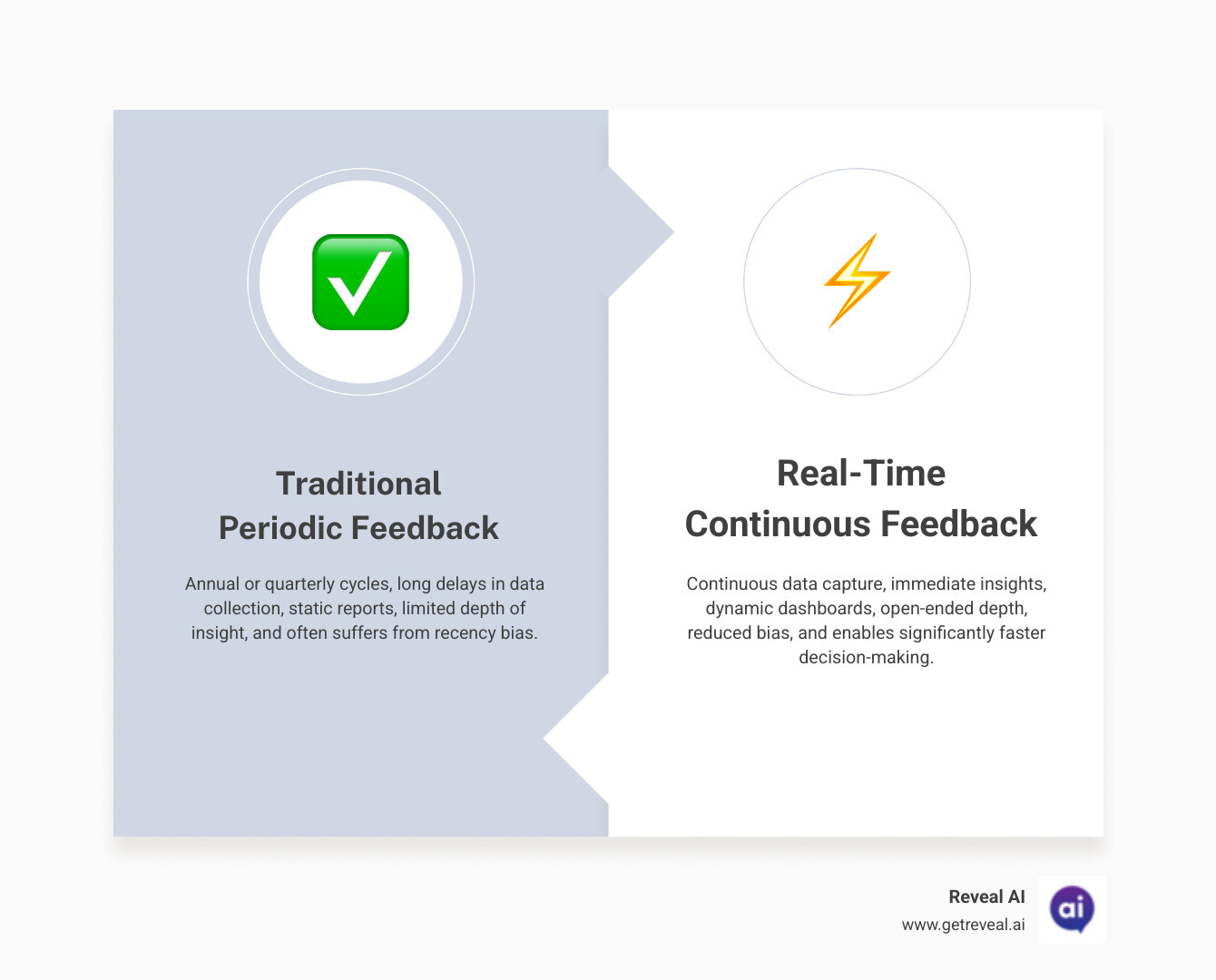
Traditional Research CyclesContinuous Real-Time Feedback LoopsAnnual or quarterly cyclesOngoing, continuous captureLong delays between data collection and analysisImmediate insightsStatic reportsDynamic dashboards and automated analysisLimited depth, often quantitativeOpen-ended, qualitative depthProne to recency biasReduced bias through continuous data collectionSlow decision-makingFaster, more agile decision-making
The Role of Technology in Enabling Real-Time Qualitative Feedback
The true enabler of this research revolution is advanced technology, particularly AI. An AI-powered qualitative research platform like RevealAI is designed to facilitate real-time feedback by changing how we collect, analyze, and interpret open-ended responses.
We leverage conversational surveys that feel natural and engaging to users, encouraging them to share richer, more detailed insights. These aren't just simple multiple-choice questions; they are designed to dig into the "why" behind user behavior. Our platform then uses sophisticated AI capabilities:
Qualitative Data Analysis: AI can process vast amounts of unstructured text data from open-ended questions, identifying themes, patterns, and insights that would take human researchers weeks to uncover.
Sentiment Analysis: Beyond just identifying topics, AI can gauge the emotional tone and sentiment expressed by users, providing a deeper understanding of their satisfaction or frustration.
Natural Language Understanding (NLU): NLU allows the AI to interpret the nuances of human language, recognizing sarcasm, intent, and subtle meanings that are crucial for accurate qualitative analysis.
This intelligent automation empowers us to move beyond simple pulse surveys to a more comprehensive understanding of user sentiment and experience. While pulse surveys offer quick check-ins, AI-driven qualitative analysis provides the depth needed to truly understand the "why" behind user actions and perceptions. For a deeper dive into how AI is shaping these practices, explore our insights on The Role of AI in HR, where many of these technological advancements are directly applicable to research contexts.
Key Features of Effective Real-Time Feedback Systems for Researchers
To truly harness the power of real-time qualitative research feedback, the platform you choose must offer specific features that prioritize research-grade quality and trustworthiness. For market research firms, UX and product teams, we know that generic tools simply won't suffice.
Here are the essential features we believe are critical:
Research-Grade AI with Built-in Guardrails: The AI should be specifically trained for qualitative research, not just general language tasks. It must have mechanisms to prevent hallucinations and maintain the integrity of the data.
Data Integration: Seamlessly integrate feedback from various touchpoints (e.g., in-app feedback, website surveys, user interviews) into a unified platform for a holistic view.
Automated Qualitative Analysis: Tools that can automatically identify themes, sentiment, and key drivers from open-ended text, drastically reducing manual analysis time.
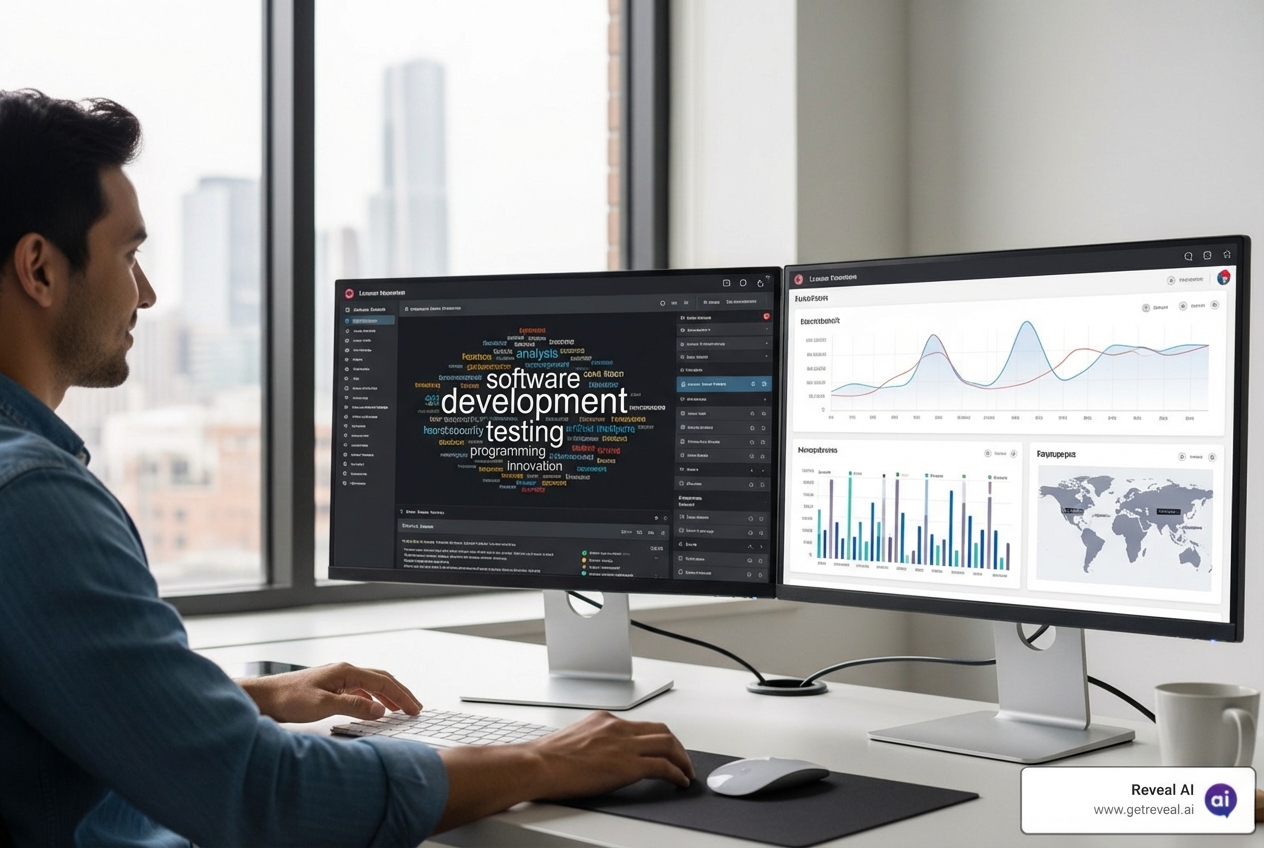
Data Visualization: Clear, intuitive dashboards that present complex qualitative data in an easily digestible format, highlighting trends and actionable insights.
Verifiability: Crucially, insights must be verifiable. This means the platform should provide direct quotes from users to support every insight, allowing researchers to trace findings back to their source.
Attribution to Source: Every piece of feedback and subsequent insight should be clearly attributed to its original source, ensuring transparency and credibility.
Scalability: The ability to handle large volumes of feedback without compromising on speed or depth of analysis, allowing for broad user engagement.
User-Friendly Interface: An intuitive design that allows researchers to easily set up conversational surveys, analyze data, and generate reports without extensive training.
'Walled Garden' Data Model: A commitment to data integrity by only processing data explicitly provided to the platform, ensuring no external web data is used to generate insights. This protects against bias and ensures data relevance.
These features collectively ensure that researchers can collect and analyze real time employee feedback—or rather, real-time user feedback—with confidence, changing raw data into trusted, actionable intelligence.
Implementing a Trusted Real-Time Research Feedback Loop
Implementing a continuous feedback system for market and product research requires more than just technology; it demands a strategic approach to culture, process, and trust. We empower research teams to establish a feedback loop that is both effective and inherently trustworthy.
Building a Culture of Continuous Findy
Just as fostering a positive feedback culture is vital for employees, creating a "Culture of Continuous Findy" is paramount for research. This means embedding the process of gathering and acting on user insights into the very fabric of your organization. It involves:
Stakeholder Buy-in: From product managers to executive leadership, everyone must understand the value of continuous user feedback. We help demonstrate how rapid, verifiable insights lead to better products and faster market adaptation.
Integrating Research into Workflows: Feedback shouldn't be an isolated event. Our AI-powered qualitative research platform integrates seamlessly into existing development and product management workflows, making feedback collection and analysis a natural part of daily operations.
Cross-Functional Collaboration: Real-time insights are most powerful when shared across teams. Designers can quickly iterate based on UX feedback, product teams can prioritize features, and marketing can refine messaging—all based on a shared, real-time understanding of the user.
Data-Driven Culture: We encourage organizations to accept a mindset where decisions are consistently informed by fresh, verifiable user data. This means moving away from assumptions and towards evidence.
Actioning Insights: The feedback loop is only complete when insights lead to action. Our platform helps highlight actionable themes, ensuring that the effort put into gathering feedback translates directly into product improvements.
Psychological Safety for Honest Feedback: Users must feel comfortable providing honest, even critical, feedback. Our conversational survey approach is designed to be non-intrusive and empathetic, encouraging authentic responses.
Cultivating such an environment is crucial for success. You can explore how we help Foster a thriving organizational culture where continuous learning and adaptation are key.
Best Practices for Eliciting and Interpreting User Feedback
The quality of insights hinges on the quality of the feedback collected and how it's interpreted. With real-time qualitative research, we emphasize precision and neutrality.
Asking Open-Ended Questions: To get to the "why," we need to move beyond closed-ended questions. Our conversational AI interviews are designed to elicit rich, descriptive responses that reveal user motivations, pain points, and desires.
Avoiding Leading Questions: Bias can creep in easily. We guide researchers on crafting neutral questions that don't steer users towards a particular answer, ensuring the feedback reflects genuine sentiment.
Active Listening (via AI): Our AI-powered platform effectively "listens" to the qualitative data. It processes responses with Natural Language Understanding to grasp context and nuance, much like a human interviewer actively listens to understand fully.
Identifying Behavioral Patterns: Beyond individual responses, our tools help researchers identify recurring themes and behavioral patterns across a user base, providing a macro view of the user experience.
Segmenting Feedback: Not all users are the same. We enable researchers to segment feedback by demographics, behavior, or other relevant criteria, allowing for targeted analysis and personalized product development.
Mitigating Researcher Bias: Traditional qualitative analysis can be susceptible to researcher bias. Our AI provides an objective lens, presenting themes and insights directly supported by user quotes, reducing subjective interpretation.
Just as Forbes emphasizes creating a healthy feedback process in a general context, we apply similar principles to ensure robust, unbiased qualitative research.
Overcoming Implementation Challenges with Research-Grade AI
The promise of real-time qualitative research feedback comes with its own set of challenges, particularly when leveraging AI. Researchers face pressure to use AI for speed and cost savings, but often encounter risks with generic AI tools. These include:
Data Overload: The sheer volume of real-time qualitative data can be overwhelming for human analysts, leading to bottlenecks and delayed insights.
Generic AI Risks: Many AI tools, while powerful, are not built for research. They can lead to:
Hallucinations: AI generating plausible-sounding but factually incorrect information.
Lack of Attribution: Insights presented without direct quotes or clear links to the original user feedback, making them untrustworthy.
Loss of Nuance: General AI models may oversimplify complex qualitative data, missing subtle but critical insights.
Declining Client Trust: If insights cannot be verified, clients and stakeholders lose confidence in the research.
At RevealAI, our core philosophy is 'Trust first, not novelty first.' We address these challenges head-on by providing research-grade AI with built-in guardrails:
Ensuring Data Integrity: We operate within a 'Walled Garden' data integrity model. This means our AI only processes data explicitly provided to the platform, never drawing from external web sources. This eliminates the risk of hallucinations and ensures all insights are grounded in your specific research data.
Verifiable Insights with Direct Quotes: Every insight generated by RevealAI is accompanied by direct quotes from users. This allows researchers to verify the findings instantly, providing transparency and confidence in the data.
Human Source Verification: Our platform maintains a clear link to the human source of every piece of feedback, allowing for deep dives into individual responses and ensuring accountability.
This approach ensures that market research firms, UX and product research teams, and analysts can leverage AI for speed and efficiency without compromising on the accuracy and trustworthiness that are critical to their work. To see how our platform specifically addresses these needs, explore our Use Case: Market Research.
Conclusion: Real-Time Feedback as a Competitive Advantage
The shift to real time employee feedback principles in market and product research is not merely a trend; it's a fundamental evolution in how organizations understand and respond to their users. For market research firms, UX and product research teams, and analysts, this means moving beyond the limitations of traditional, slow research cycles to accept a continuous, dynamic dialogue with their audience.
The benefits are clear: faster product iteration, deeper understanding of user needs, and a significant competitive advantage in a rapidly changing market. However, realizing these benefits requires more than just collecting feedback frequently. It demands a sophisticated approach that prioritizes trust, verifiability, and research-grade AI.
At RevealAI, we understand that insights are only valuable if they are trustworthy. Our AI-powered qualitative research platform is designed with this principle at its core, offering a 'Walled Garden' data model, verifiable insights with direct quotes, and human source verification. We empower you to harness the speed of AI without sacrificing the integrity and nuance that define excellent research.
Accept the future of research with confidence. To learn more about how RevealAI can transform your qualitative research process and provide the trusted insights you need to make critical business decisions, we encourage you to explore our Buyers Guide.
¹ Source: McKinsey & Company (as cited in Engagedly.com research)