Blog
The Ultimate Guide to Marketing Target Audience Analysis

Riddhi Patel

Customer research analysis is the process of taking raw customer input — interviews, surveys, open-ended feedback, and behavioral data — and extracting meaningful patterns, themes, and insights that drive smarter business decisions.
If you need a quick answer, here's what it covers:
Most research teams face the same problem. You've gathered the data. Transcripts, survey results, open-ended responses — a mountain of it. But turning that into something your stakeholders can act on? That's where the process breaks down.
Manual analysis is slow. Generic AI tools like ChatGPT can produce vague themes, out-of-context quotes, or worse — fabricated insights that have to be redone from scratch. And stakeholders aren't waiting.
The pressure is real: "Where's the analysis?" "We need to decide NOW." "When can we share this with the team?"
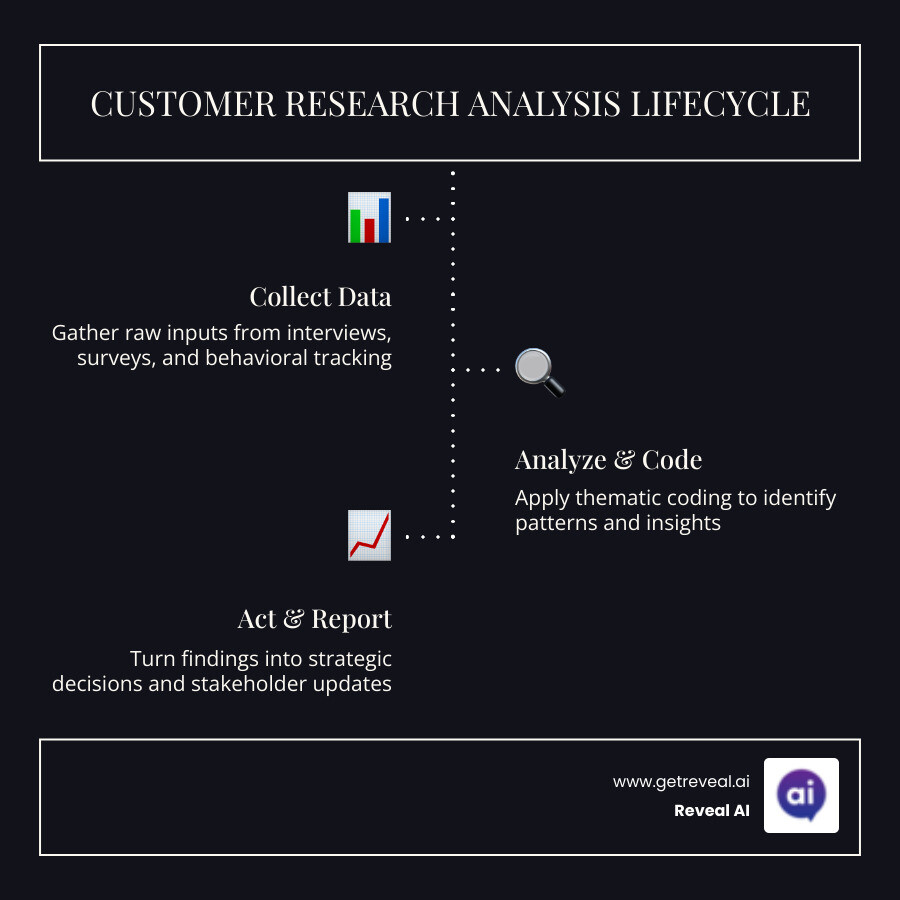
This guide is built for market researchers, UX teams, and product analysts who need to move from raw data to reliable insight — faster, and without sacrificing the rigor that clients and stakeholders trust. We'll cover the full customer research analysis lifecycle: the fundamentals, the methodologies, the role of AI done right, and how platforms like Reveal AI are built specifically to solve this problem.
To master customer research analysis, we must first distinguish it from its broader cousin: market research. While market research looks at the "what" and "how many" of an entire industry—competitor pricing, market saturation, and economic indicators—customer research zooms in on the "who" and the "why."
It is a focused subset that prioritizes the user’s lived experience. We aren't just looking for market trends; we are hunting for the emotional friction and unmet needs that drive individual behavior.
In our analysis, we balance two types of information:
Effective customer research analysis requires a mixed-methods approach. Quantitative data (surveys, NPS scores, click-rates) tells us what is happening. For example, it might show that 60% of users drop off during the onboarding flow.
Qualitative data (interviews, open-ended feedback) tells us why. It reveals that those users aren't leaving because of price, but because they find the "Team Invite" step confusing. The Evolution Of Market Research has moved us toward a world where these two data types are no longer siloed but integrated to create a holistic view of consumer behavior.

In today’s hyper-competitive landscape, guessing is expensive. Research shows that 72% of new products fail because they don’t address genuine customer needs. Conversely, companies that invest in customer-centric technology report 60% higher profits than those that don’t.
When we perform rigorous market research, we achieve:
Turning raw feedback into a strategic roadmap requires a systematic process. We recommend following these seven steps:
As we scale our research efforts, the complexity of the data increases. This is where advanced methodologies—specifically AI-powered clustering and deep segmentation—become essential.
FeatureTraditional Manual AnalysisAI-Powered Qualitative ResearchSpeedWeeks of slogging through transcriptsNear-instantaneous pattern detectionScalabilityLimited by human headcountCan analyze thousands of voices at onceBiasSubject to researcher's internal leaningsObjective, data-driven theme extractionNuanceHigh (if the researcher is experienced)Research-grade AI preserves contextCostHigh (labor-intensive)Can reduce research costs by up to 50%
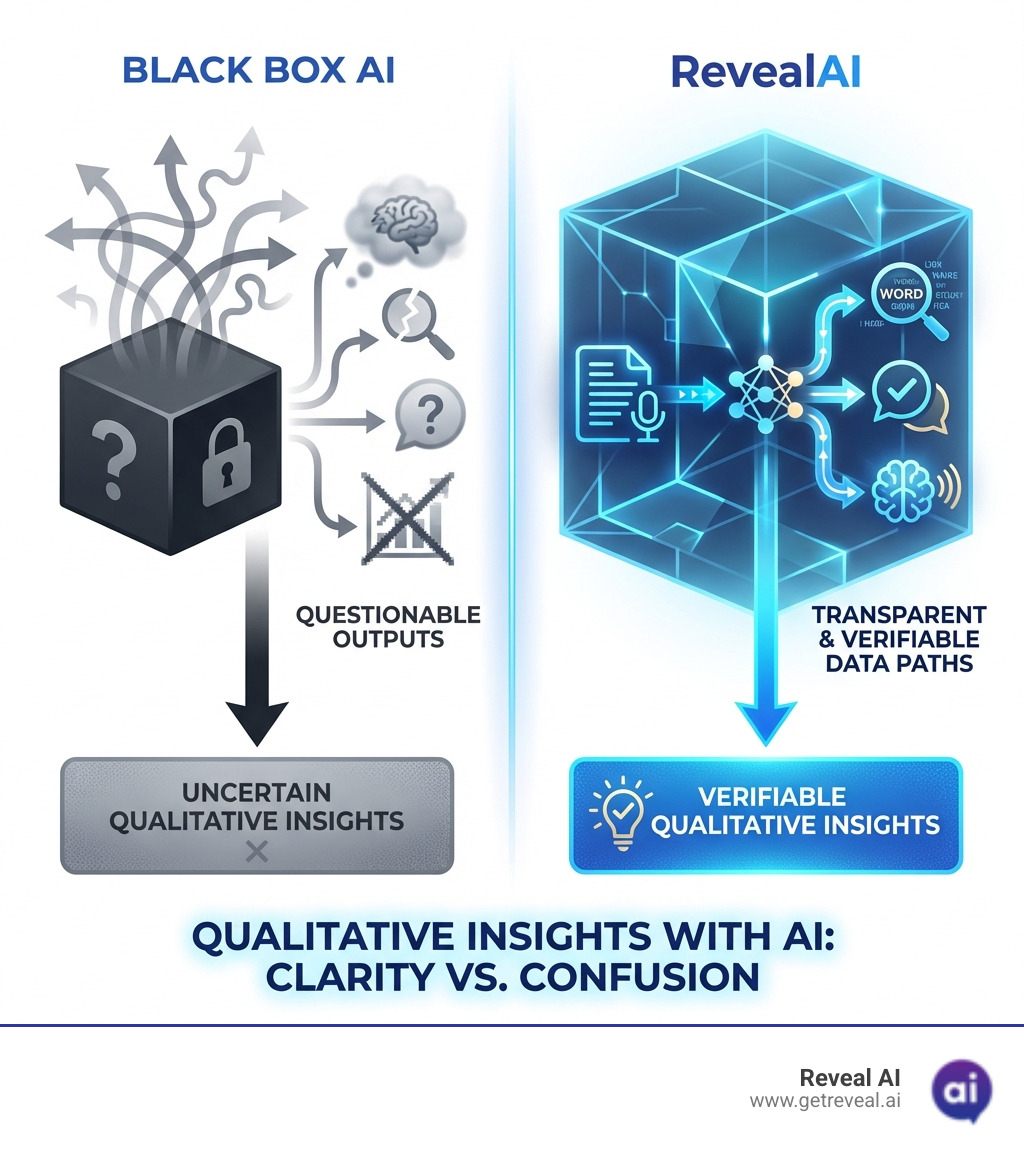
Not all AI is created equal. Generic AI tools often suffer from "hallucinations"—they make things up when they don't have an answer. For professional researchers, this is a deal-breaker.
At Reveal AI, we champion a "Trust First" philosophy. Our AI-powered qualitative research platform uses a Walled Garden data integrity model. This means the AI only analyzes the specific data you provide; it doesn't pull in random information from the internet.
Key differentiators of research-grade AI include:
Static personas—like "Marketing Mary, who likes lattes"—are often a waste of time. They include irrelevant details that don't drive product decisions. Instead, we focus on Jobs-to-Be-Done (JTBD) and emotional drivers.
Research from Harvard suggests that 95% of customers' purchase decisions happen subconsciously. To capture this, our audience intelligence efforts should segment users by:
By grouping customers into these dynamic segments, we can tailor our messaging and product roadmap to what they actually do, rather than what they say they do.
In an era of increasing data regulation, ethics in customer research analysis is critical for maintaining client trust. We must move beyond simple compliance and aim for radical transparency.
The goal of customer research analysis isn't to create a 50-page PDF that sits in a digital drawer. It is to drive action. Every insight we uncover should be framed as a testable hypothesis: "We believe that by simplifying the team invite flow (Insight), we will increase onboarding completion by 20% (Outcome) for our B2B segment (Persona)."
To succeed, we must establish a continuous research loop. Customer needs aren't static; they evolve as the market changes. By conducting regular, automated qualitative analysis, we keep our fingers on the pulse of the user voice without the massive resource burden of traditional methods.
At Reveal AI, we’ve seen how shifting from "manual slogging" to "AI-powered synthesis" transforms the researcher's role. It frees you from the "grunt work" of transcription and coding, allowing you to focus on what you do best: storytelling, strategy, and high-level decision-making.
Ready to stop guessing and start listening? Transform your business decisions with Reveal AI and see how research-grade AI can turn your customer voices into your greatest competitive advantage.