No items found.

Blog
Beyond Transcripts: A Comprehensive Look at AI Interview Analysis

Rhythm Dahiya
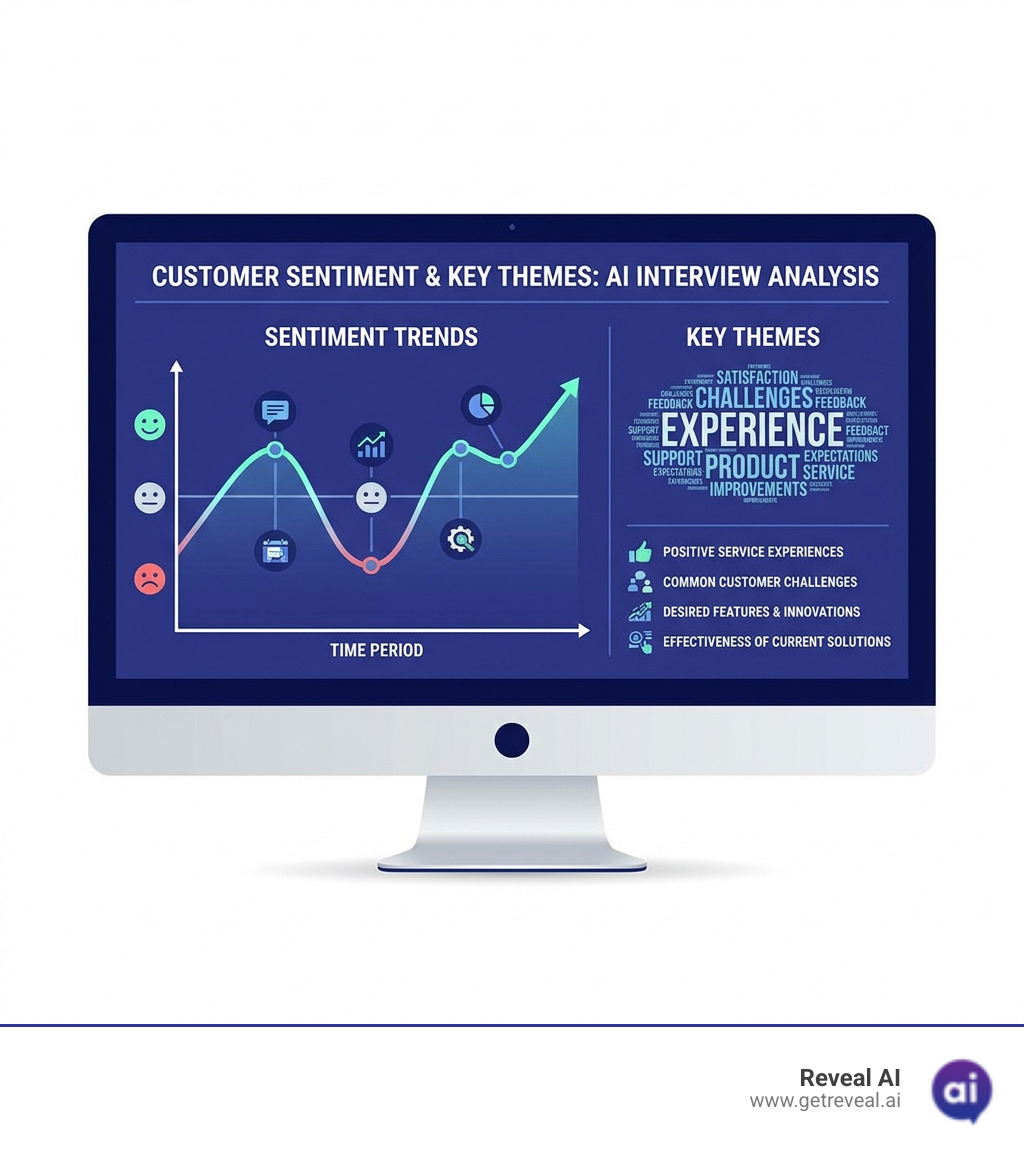


AI interview analysis uses artificial intelligence to process and interpret interview conversations, turning raw transcripts, audio, or video into structured insights. Instead of spending days manually coding responses, researchers and hiring teams can now use AI to surface key findings in hours, not weeks.
What AI interview analysis delivers:
Every research professional has been there: you finish a great interview, but by the time you regroup with your team, key details have blurred. This isn't just inconvenient; it's expensive. Organizations waste time in circular debates and make gut decisions on incomplete data, missing critical signals buried in hours of conversation.
AI promises to change this, but not all tools are created equal. Generic chatbots can hallucinate findings, strip away nuance, and provide summaries without showing their work—a dealbreaker for professionals who need to defend their insights. The global data analytics market is projected to reach $529.72 billion by 2030, driven by organizations needing to process vast amounts of qualitative data. They need AI they can trust.
This guide explains how AI interview analysis works, what it can and can't do, and how to implement it without sacrificing rigor. Whether you're hiring, conducting user research, or analyzing customer feedback, you'll learn how to extract verifiable, actionable intelligence from every conversation.
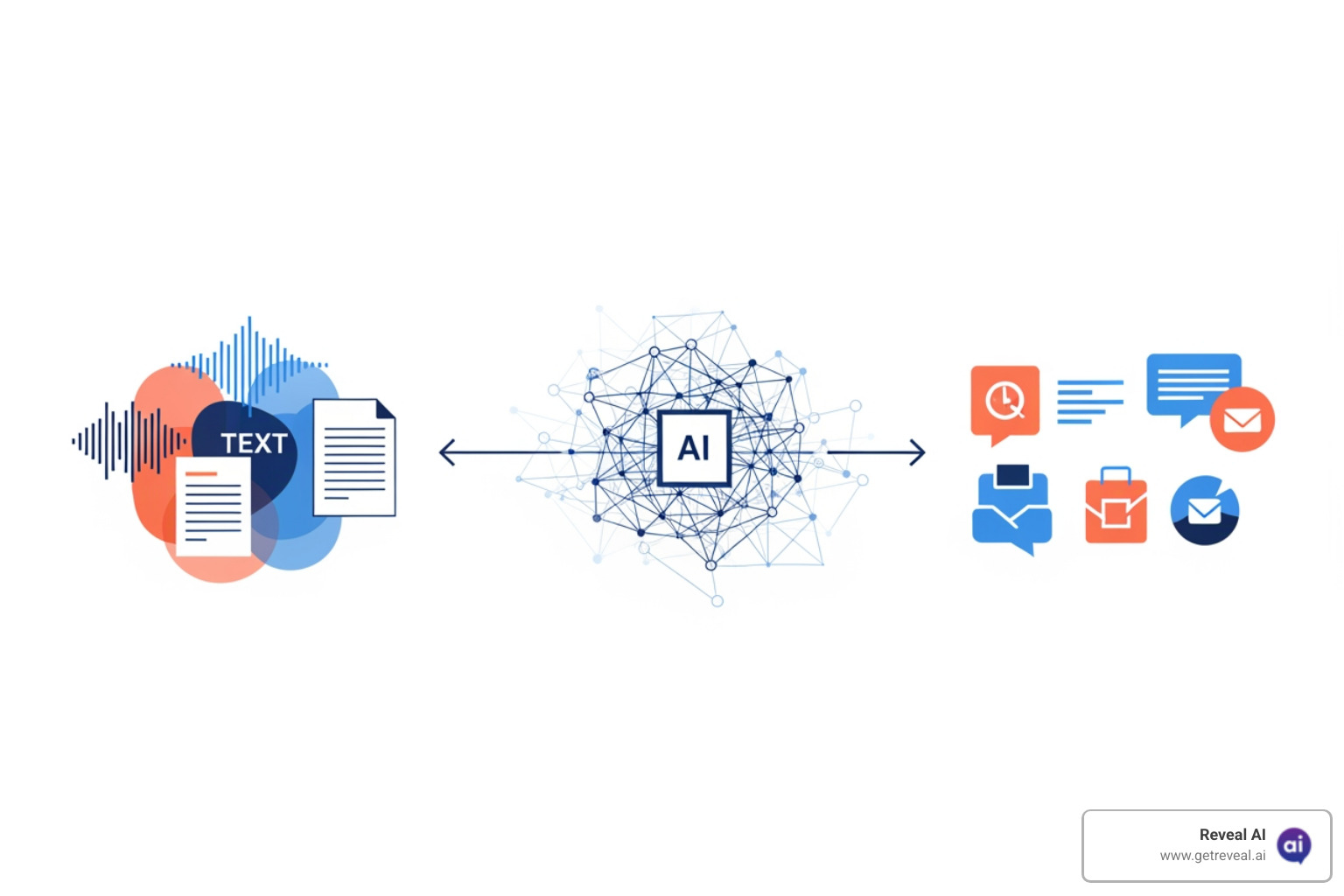
At its core, AI interview analysis is the application of artificial intelligence to understand human conversations. It acts as a tireless assistant that listens to every interview, records every word, and then instantly reports what was said, how it was said, and what it all means.
Traditionally, interview analysis relies on human memory and subjective interpretation, a process that is slow and prone to bias. Our approach to AI interview analysis transforms this manual slog by using AI to process transcripts or recordings. This allows us to identify patterns, summarize themes, and provide structured insights focused on job-relevant dimensions or research objectives. The goal is to deliver objective, data-driven evaluations that minimize human bias, enabling more informed decisions. This shift is revolutionizing how organizations approach qualitative data, as detailed in our exploration of the role of AI in HR.
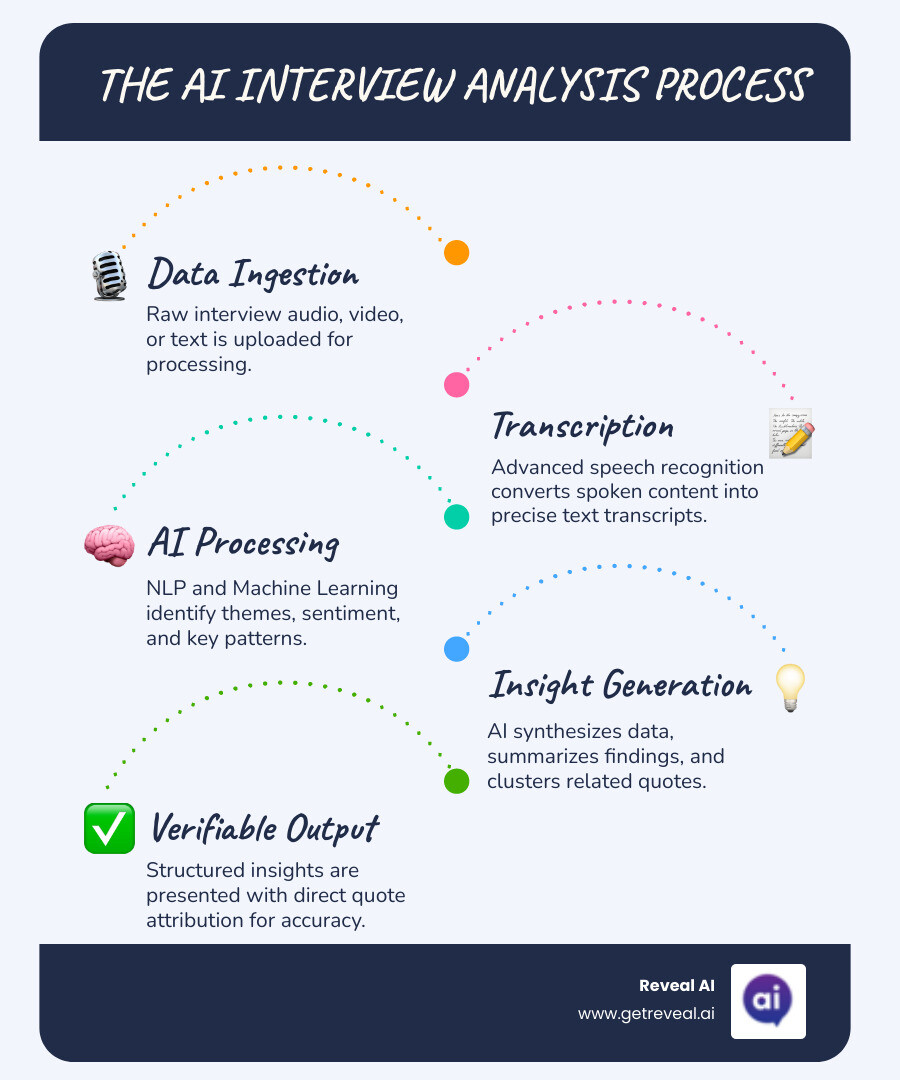
The process begins with data collection, either by recording interviews or uploading existing files. Speech recognition technology then converts spoken words into an accurate text transcript. Once we have the text, the real AI interview analysis begins, turning raw data into structured, qualitative insights.
The magic behind AI interview analysis lies in several sophisticated technologies working in harmony to understand the nuances of human language.
Generic AI tools can struggle with context or generate "hallucinations" (made-up information). This is why a research-grade platform like ours, focused on verifiable and trustworthy insights, is essential.
So, how does AI interview analysis transform raw data into intelligence you can use? It's a multi-stage process designed for efficiency and depth.
The adoption of AI interview analysis is a strategic move driven by tangible benefits that impact efficiency, decision-making, and organizational intelligence.
One of the most immediate benefits is efficiency gains. AI tools can cut qualitative analysis time by up to 80%, reclaiming days or weeks previously spent on manual coding. This dramatic time reduction means faster insights and quicker decision cycles.
Beyond speed, AI interview analysis enables truly data-driven decisions. By processing vast amounts of qualitative data and identifying patterns that might escape human observation, AI provides objective, structured insights. This means decisions are based on verifiable evidence, not gut feelings. Our platform helps turn customer voices into business decisions rapidly.
Consistency at scale is another key advantage. AI applies the same analytical criteria consistently across hundreds of interviews, ensuring every data point is evaluated objectively. This standardization is vital for reliable comparisons.
Furthermore, AI interview analysis contributes to long-term hiring intelligence. By building a data trail, organizations can correlate interview insights with post-hire performance and refine recruitment strategies. Research shows that companies using AI have reported measurable improvements in hiring accuracy. This extends beyond hiring into broader employee feedback, as explored in our article on how real-time employee feedback enhances HR practices.
One of the most compelling arguments for AI interview analysis is its potential to significantly reduce bias. With nearly half (48%) of HR managers admitting that biases influence their hiring choices, AI offers a powerful solution.
While AI is a powerful tool for fairness, it's crucial to select a research-grade platform with a "Trust first" philosophy to ensure the AI itself is unbiased.
The benefits of AI interview analysis extend far beyond recruitment, offering profound advantages for market and user experience (UX) research teams.
In market research, our platform helps in understanding customer needs at an unprecedented scale. Instead of lengthy manual analysis, AI can process thousands of conversational data points to uncover unmet needs, jobs-to-be-done, and hidden pain points. This is a game-changer for leveraging AI in market research.
For user research teams, AI interview analysis enables analyzing feedback at scale from usability tests and concept testing sessions. Our AI can process recordings to identify common task failures, UI confusion, and feature findability issues. It can even ask pertinent follow-up questions to uncover specific pain points, delivering deeper insights from shorter interviews. This means product teams can iterate faster, confident that their decisions are backed by robust, verifiable user insights.
While the promise of AI interview analysis is immense, its implementation demands a responsible, ethical approach. The power of AI comes with critical considerations that, if overlooked, can undermine trust.
Ethical considerations are paramount. Data privacy and confidentiality are non-negotiable, requiring compliance with regulations like GDPR and HIPAA. A significant concern with generic AI tools is the risk of AI hallucinations—instances where the AI generates plausible but false information. For researchers or hiring teams who need to defend their findings, this is unacceptable. Generic chatbots may also use your data for training their models, posing a security risk.
This is why we champion a "Trust first, not novelty first" philosophy. Our platform operates within a "Walled Garden" data integrity model, meaning our AI does not pull from the public web, nor does it use your sensitive data to train external models. This commitment ensures data privacy and prevents hallucinations, providing insights grounded in your actual data.
Adopting a human-in-the-loop approach is also essential. AI is a powerful assistant, not a replacement for human judgment, empathy, or strategic thinking. Human oversight is always required for contextual understanding and interpretation.
To harness AI interview analysis effectively and ethically, we recommend adhering to several best practices:
The market for AI interview analysis tools is growing, but not all solutions are created equal. Here’s what to look for in a research-grade platform:
The trajectory of AI interview analysis points to a future where qualitative intelligence is not just faster, but also more predictive and seamlessly integrated into strategic decision-making. We are on the cusp of a revolution where insights from human conversations will drive business with unprecedented precision.
The global data analytics market is projected to reach $529.72 billion by 2030, growing at a CAGR of 27.3%. This highlights the increasing reliance on data-driven strategies, and AI-powered qualitative intelligence is ready to capture a significant share of this growth.
One of the most exciting future developments is predictive analytics based on qualitative data. Imagine not just understanding current customer sentiment, but predicting future market trends based on subtle shifts in user language. AI can analyze vast datasets of conversations to identify early indicators of changing needs or potential market disruptions. This foresight can inform product development, marketing strategies, and even predict workforce trends, a key component of new leader success.
We also anticipate a future of real-time insights. As AI models become more sophisticated, the gap between data collection and insight generation will shrink, allowing businesses to react almost instantaneously to customer feedback and market shifts.
While AI interview analysis is often discussed in the context of hiring, its applications are incredibly diverse across qualitative intelligence:
Our platform is uniquely positioned to serve these diverse needs, enabling research teams to conduct conversational AI interviews at scale and analyze qualitative feedback with speed, structure, and verifiable trust.
We understand that adopting a powerful new technology like AI interview analysis comes with questions. Here are some of the most common ones we encounter:
Our research-grade AI uses sophisticated Natural Language Processing (NLP) to go beyond simple keyword matching. It analyzes sentence structure, vocabulary, and logical flow to assess response quality. By identifying recurring themes, it can determine if all critical topics have been covered. While sentiment analysis measures emotional tone, our tools prioritize the factual content and structure of responses to ensure objective, verifiable insights, not subjective interpretations.
While powerful, AI interview analysis has limitations, especially with generic tools:
These limitations highlight why a "human-in-the-loop" approach and a trustworthy AI platform are crucial.
No, AI is a powerful assistant, not a replacement. We emphasize this distinction:
The best approach is a human-in-the-loop model that combines AI's scale and efficiency with human expertise for nuanced interpretation and strategic insight. Our platform empowers researchers to do their best work, faster and with greater confidence.
The landscape of qualitative intelligence is undergoing a profound change, driven by AI interview analysis. We've moved from the manual drudgery of traditional methods to the verifiable insights offered by advanced AI. This shift is about elevating the quality, consistency, and depth of our understanding of human conversations.
The key benefits are clear: unprecedented speed, consistent evaluation at scale, deeper insights, and a significant reduction in human bias. This empowers organizations to make faster, more confident, and truly data-driven decisions across hiring, market research, and team dynamics.
However, the true power of AI interview analysis lies in its ability to deliver trustworthy insights. Generic AI tools, with their risks of hallucinations and lack of attribution, undermine credibility. This is why choosing a research-grade platform built on a "Trust first" philosophy is paramount. Our "Walled Garden" data model and direct quote attribution ensure every insight is verifiable and defensible.
By embracing this future, AI interview analysis becomes a force multiplier for research and HR teams, enabling them to focus on strategic interpretation rather than tedious manual tasks. It's about empowering businesses to understand their customers, candidates, and employees with unparalleled clarity, leading to stronger teams and accelerated success, which is how we help accelerate leader success.
Ready to transform your qualitative intelligence? Learn how AI can transform your employee listening strategy and see how our platform can open up trusted, verifiable insights for your organization.