Blog
Talk is Cheap but Conversational Data Analysis is Priceless

Riddhi Patel
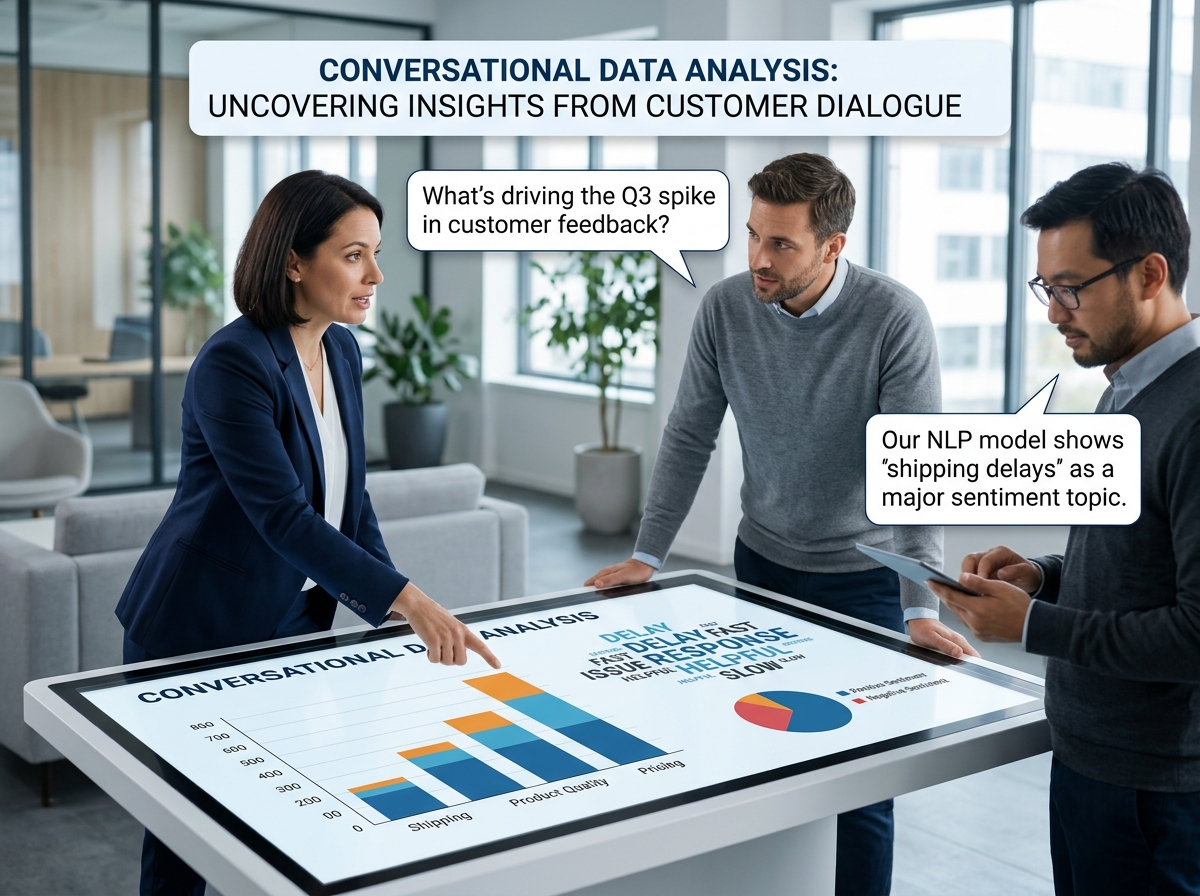
Conversational data analysis is the process of using AI and Natural Language Processing (NLP) to extract structured, actionable insights from unstructured human conversations — interviews, open-ended survey responses, chat transcripts, and more.
Here's what it means in practice for market researchers and product teams:
The global conversational AI market is on a steep growth curve — valued at over $11.5 billion in 2024 and projected to exceed $41 billion by 2030. Behind that number is a simple truth: the volume of qualitative data organizations collect has exploded, while the time available to make sense of it has not.
For researchers, this creates a painful bottleneck. You have the conversations. You just can't process them fast enough to matter.
Traditional qualitative analysis — reading transcripts line by line, manually coding themes, building reports by hand — breaks down at scale. It's not just slow. It's a barrier to the kind of deep, confident decision-making that product teams and clients expect.
That's the problem conversational data analysis is built to solve. And when it's done right — with transparency, attribution, and human verifiability baked in — it doesn't just speed up research. It makes findings more trustworthy, not less.
Handy Conversational data analysis terms:
At its core, conversational data analysis is about teaching machines to "read between the lines." While traditional analytics are great at counting clicks or calculating averages, they struggle with the messy, nuanced reality of human speech.

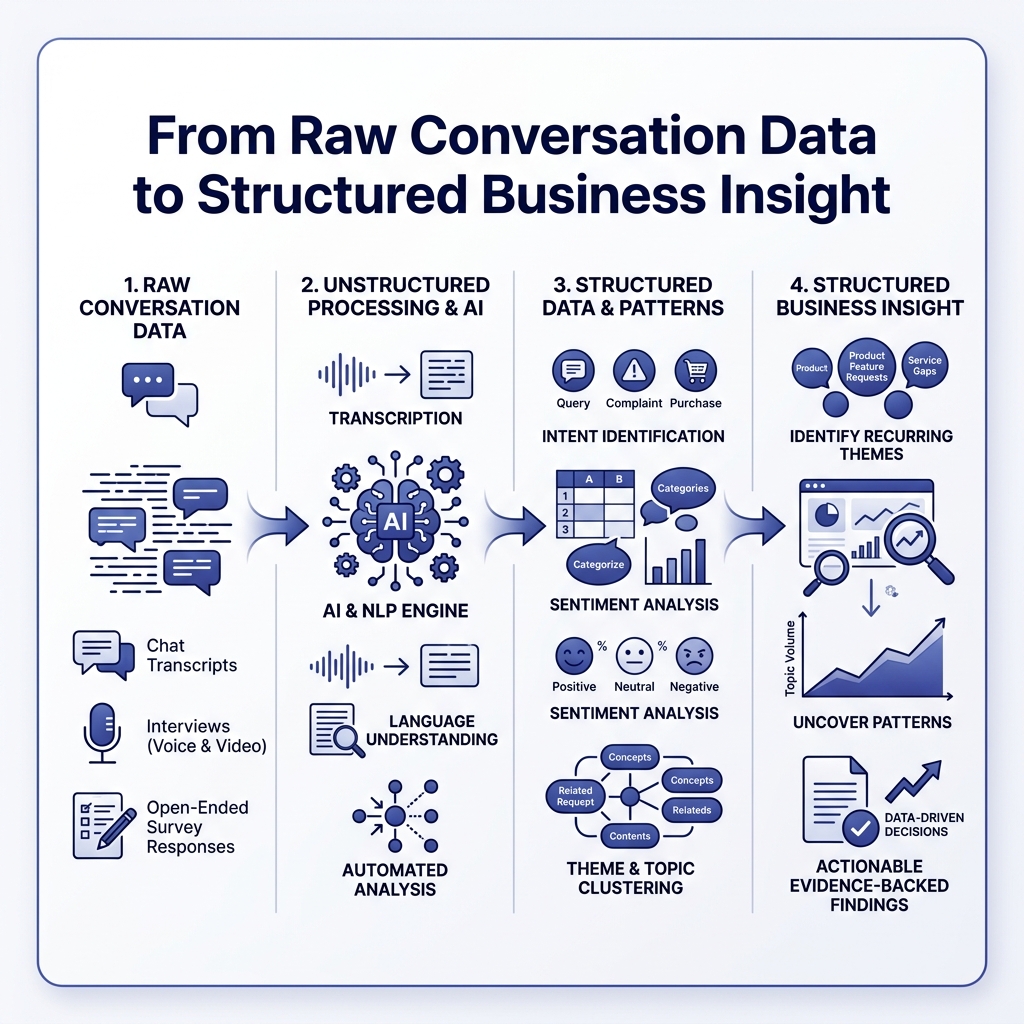
To transform a chat transcript or a detailed survey response into a strategic insight, an AI-powered qualitative research platform follows a sophisticated technical workflow:
By automating these steps, we enable Automated Qualitative Analysis that allows researchers to move from data collection to report generation in a fraction of the time it used to take.
If you’ve spent years running traditional surveys on platforms like SurveyMonkey or Typeform, you know the "Qual vs. Quant" trade-off. Quantitative surveys give you scale but lack depth; qualitative interviews give you depth but are impossible to scale. Conversational data analysis effectively collapses that divide.
FeatureTraditional SurveysConversational Analysis (AI-Powered)Question TypeMostly closed-ended (Multiple choice)Open-ended, natural dialogueFlexibilityStatic; the same for every userDynamic; AI probes deeper based on answersDepth of InsightSurface-level "What"Root-cause "Why"Analysis SpeedFast for numbers, slow for textRapid, automated qualitative synthesisScalabilityHigh (for simple data)High (for complex, nuanced data)
Traditional methods often hit a wall because they rely on static logic. If a participant gives an interesting but unexpected answer, a traditional survey just moves to the next question. In contrast, an AI research platform uses adaptive conversational flows to ask follow-up questions in real-time. This ensures you capture the "why" behind the data, solving the common problem of When Traditional Research Methods Fall Short.
The "magic" of conversational data analysis lies in its ability to perform text-to-insight transformations. Instead of a researcher spending 40 hours coding 200 interviews, the AI performs:
By Leveraging AI in Market Research, we provide a deeper understanding that was previously only possible through small-scale, expensive focus groups.
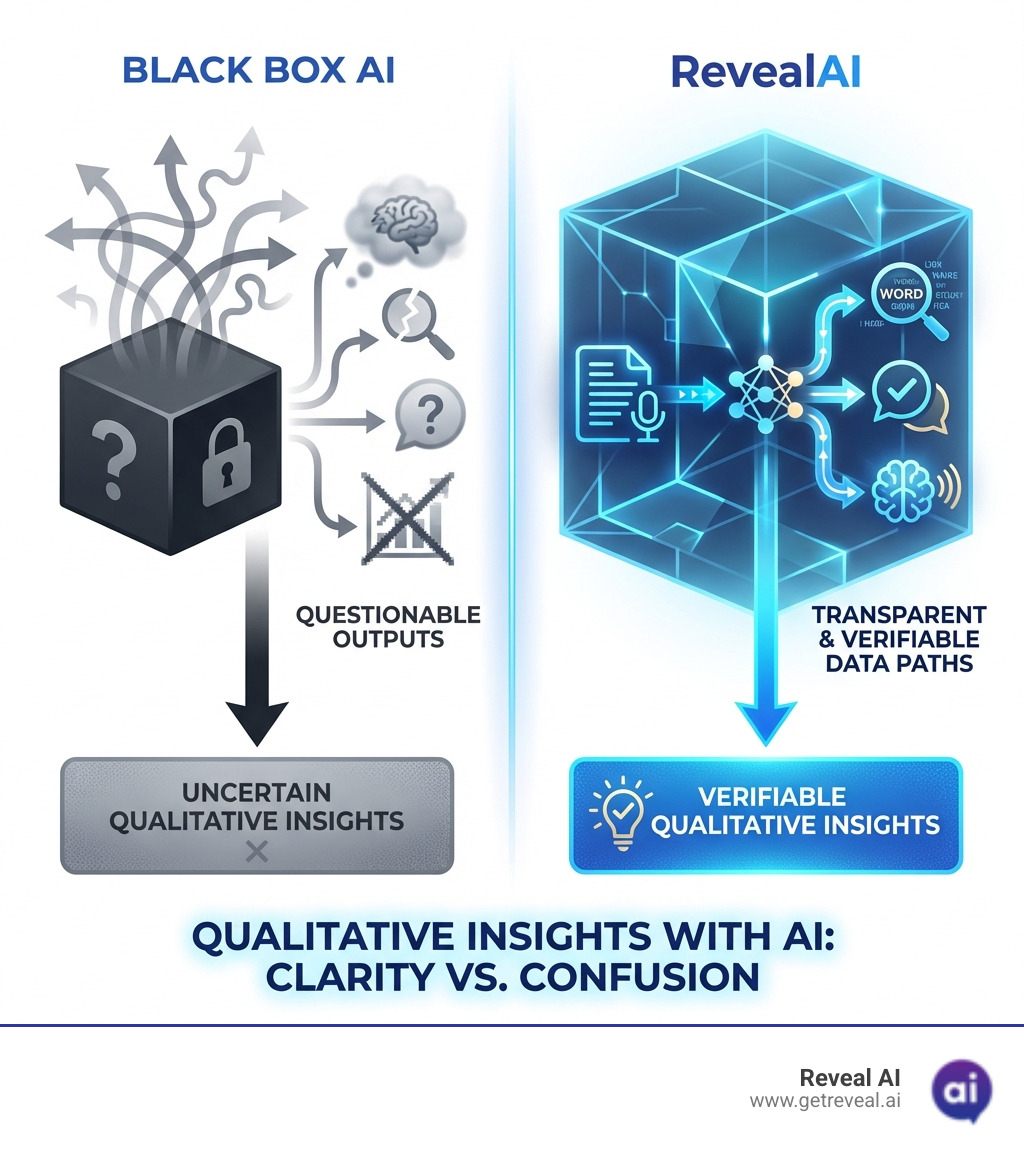
We know what you’re thinking: "Can I actually trust what the AI says?" It’s a valid question. Generic AI tools are notorious for "hallucinations"—making up facts that sound plausible but have no basis in reality.
To make conversational data analysis research-grade, we prioritize a "Trust First" philosophy. This involves several critical guardrails:
When Choosing Survey Analysis Software, these security and accuracy features are not just "nice-to-haves"—they are critical for maintaining client trust and research rigor.
The ultimate goal of conversational data analysis isn't just to have better charts; it's to make better decisions. For market researchers and product teams, this means having the confidence to tell a stakeholder, "We should pivot this feature because our users told us X, Y, and Z."
Research-grade insights allow for:
Using AI for Customer Feedback Analysis transforms a pile of "unstructured data" into a roadmap for growth.
How does this look in the day-to-day life of an analyst?
Not all platforms are created equal. While legacy experience management suites like Qualtrics or Medallia offer broad data collection, they often lack the specialized, automated qualitative depth required for true research-grade insights. When evaluating a partner for conversational data analysis, look for these non-negotiables:
The era of choosing between "fast" and "good" in qualitative research is over. Conversational data analysis provides the bridge, allowing us to listen to thousands of voices with the same intimacy we once reserved for a handful of 1-on-1 interviews.
At Reveal AI, we believe that "Trust First" is the only way forward. By combining the speed of AI with the rigor of human-verifiable data, we empower researchers to deliver insights that aren't just interesting—they are actionable and bulletproof.
Whether you are conducting concept testing for a new product in California or tracking brand sentiment across Europe, the ability to analyze conversations at scale is your most valuable competitive advantage.
Ready to see the difference research-grade AI can make?Learn more about Reveal AI's research platform services and start turning talk into your most priceless asset.