No items found.

Blog
Your Complete Customer Feedback Platform: Collect, Analyze, Organize

Bob Dimicco


A customer feedback platform is software that helps businesses collect, organize, and analyze feedback from customers across multiple channels—then turn those insights into action. Modern platforms use AI to automate analysis, track sentiment, and prioritize product decisions based on real customer data rather than assumptions.
Key capabilities of a customer feedback platform:
Here's the reality: customer expectations have never been higher. One poor experience is all it takes—74% of customers will switch to a competitor if their path to purchase is too difficult.
Yet many teams still rely on spreadsheets, scattered surveys, and gut feelings. As one Product Operations Leader put it: "Customers felt like our feedback platform was a black hole. We weren't able to follow up in a meaningful way."
The cost of not listening is steep. When a Chief Product Officer asked teams to share their top customer requests with associated accounts and ARR, no one could answer that question. Without a systematic way to capture and quantify feedback, businesses make decisions based on the loudest voice rather than the most important needs.
A customer feedback platform solves this by creating a continuous loop: you collect feedback from every touchpoint, analyze it for patterns and sentiment, act on the insights that matter most, and close the loop by showing customers their voices were heard. This isn't just about collecting data—it's about building trust, reducing churn, and making smarter product decisions.
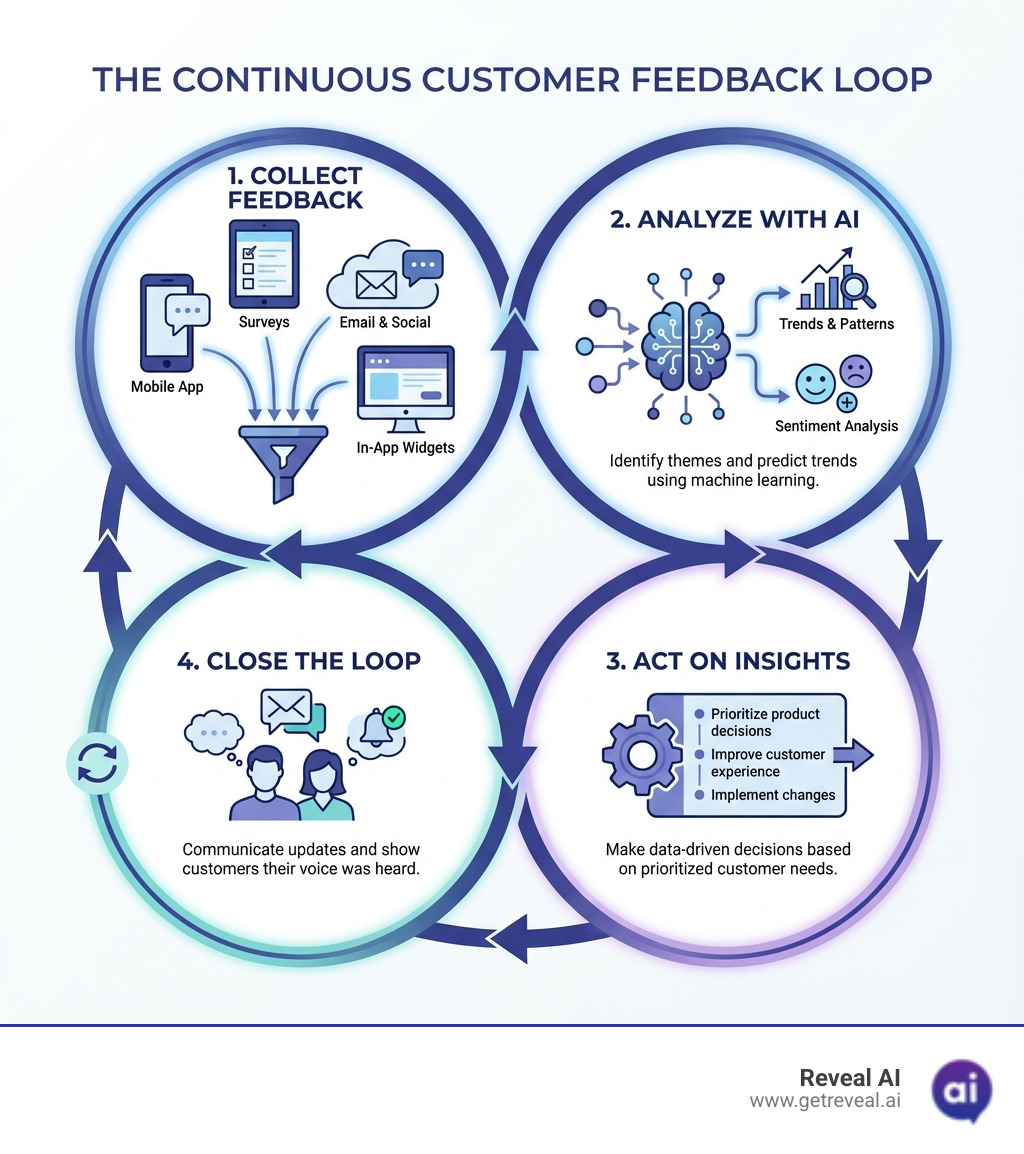
In today's competitive landscape, customer satisfaction and loyalty aren't just buzzwords; they're the bedrock of sustainable growth. This is where a robust customer feedback platform truly shines. It transforms anecdotal complaints and scattered data points into a strategic asset that fuels every aspect of our business.
One of the most immediate and tangible benefits we see is a direct improvement in customer satisfaction and loyalty. By systematically collecting and acting on feedback, we can proactively address pain points and improve positive experiences. For example, one company reported that "within a few months, our NPS was up almost 15 points." This isn't just a number; it reflects a significant increase in customers who are willing to recommend your products or services, a powerful indicator of loyalty. Embracing a customer-centric approach through feedback platforms is fundamental to The Power of Customer-Centric Branding.
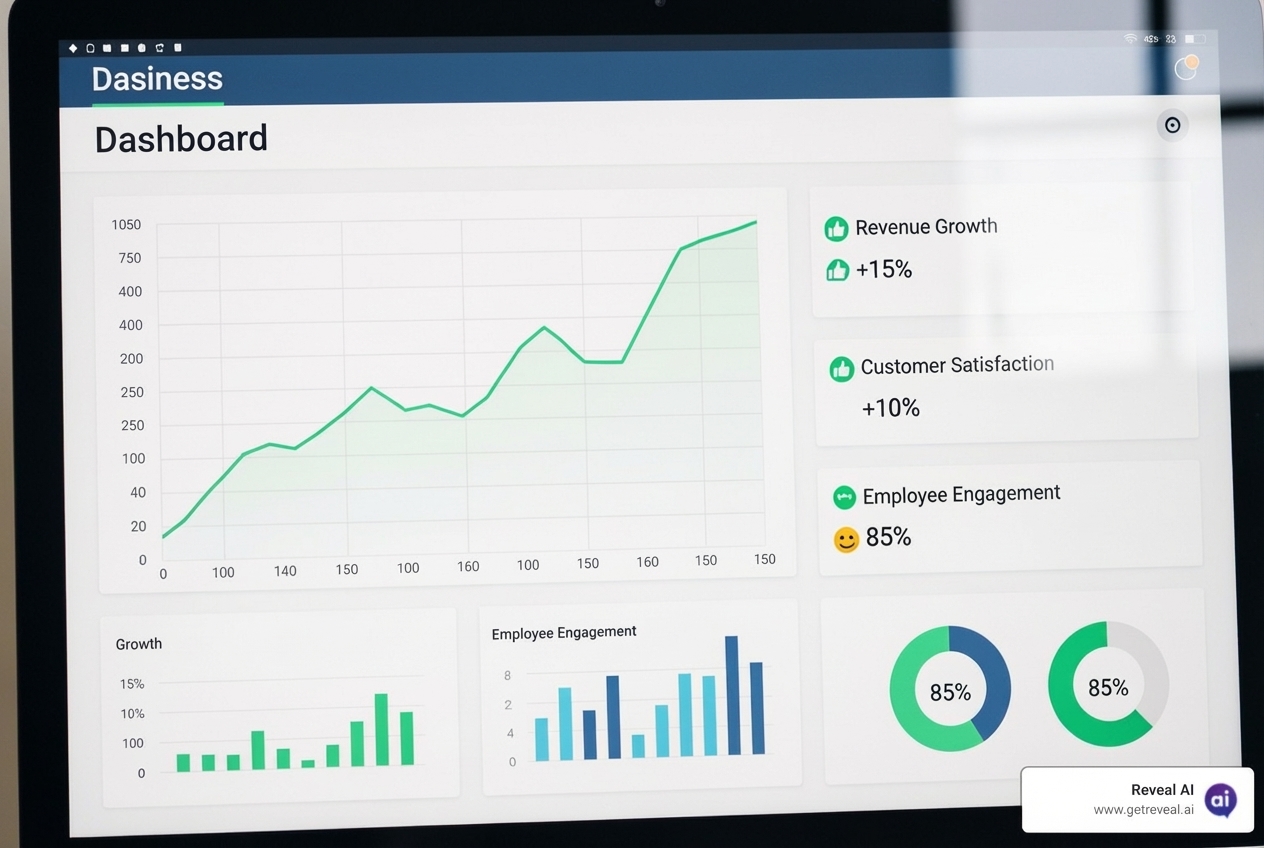
A common challenge for many organizations is making data-driven decisions when it comes to product development and resource allocation. Without a proper feedback system, teams often fall victim to the "squeaky wheel" problem—prioritizing features based on the loudest, not necessarily the most impactful, requests. As one Product Manager lamented, "We wanted to avoid the ‘squeaky wheel’ problem. We were always trying to get an idea of how often the same requests were made, but no one could give us answers." A customer feedback platform provides the tools to quantify these requests, allowing us to understand the true demand and associated value. This was highlighted when a Chief Product Officer asked for top customer requests with associated accounts and ARR, and no one could answer. A feedback platform helps us connect those dots, enabling us to manage data in a more meaningful way and prioritize our roadmap with real customer data.
Beyond product development, these platforms are instrumental in boosting retention and streamlining the renewal process. When customers feel heard and see their feedback translated into improvements, their perception of our value skyrockets. "We’re able to pull down very swiftly here’s everything we’ve delivered for our clients…We can say look at the hundreds of interactions we’ve had with you as a client. We’ve answered all your questions, we’ve talked with you a lot, we take your feedback into consideration way more than before. And all of this is easily put into presentations for the renewal process," shared a Director of Product Operations. This level of transparency and responsiveness makes individual users feel more valued and strengthens client relationships.
Finally, a customer feedback platform is crucial for aligning internal teams and breaking down silos. It creates a shared source of truth, ensuring that everyone—from product and engineering to sales and customer success—is working from the same understanding of customer needs. As one Product Operations Manager noted, the platform helped them "build out an ecosystem where everyone in the business is engaged with customer feedback." When product management responds to feedback, other teams recognize the value, leading to more valuable analytics and a collective momentum towards incorporating the customer voice across the entire organization.
A modern customer feedback platform is far more than just a survey tool. It's a sophisticated ecosystem designed to capture, analyze, and act on the voice of the customer at every touchpoint. Understanding its core functionalities and essential features is key to leveraging its full potential.
At its heart, a platform should offer multi-channel data collection, funneling all insights into a centralized feedback hub. From there, intuitive analysis dashboards empower us to make sense of the data, ultimately driving proactive measures and closing the feedback loop with our customers. Robust integrations ensure that feedback flows seamlessly into our existing tech stack, making it an indispensable part of our daily operations.
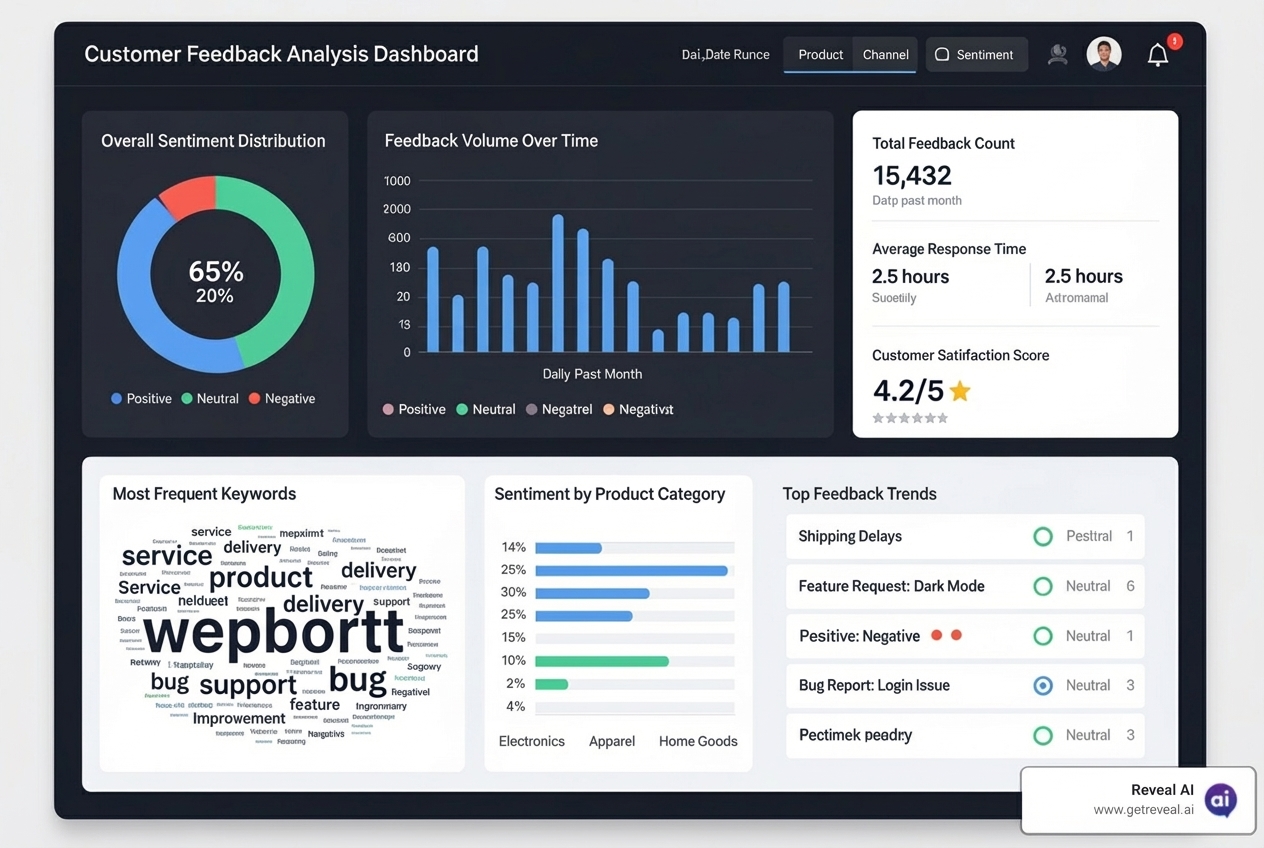
Customers interact with our business in numerous ways, and a good customer feedback platform should meet them where they are. This means supporting a variety of collection methods:
Collecting feedback is only half the battle; the real value lies in what we do with it. A powerful customer feedback platform provides a centralized hub for all this data, enabling sophisticated analysis and clear reporting:
Sentiment analysis is a game-changer in understanding the true emotional context of customer feedback. It moves beyond simple ratings to uncover the 'why' behind customer opinions.
The future of customer experience is deeply intertwined with artificial intelligence and machine learning. At Reveal AI, we leverage these technologies to transform raw customer voices into actionable business decisions rapidly.
The market for customer feedback platform solutions is diverse, offering a range of tools custom to different needs and budgets. From comprehensive experience management suites to specialized AI-powered research solutions, understanding the landscape is crucial for making an informed choice.
For organizations seeking a holistic approach to customer experience, comprehensive platforms like Reveal AI offer an all-in-one solution. These platforms are designed to track and manage feedback across the entire customer lifecycle, providing a unified view of customer sentiment and behavior.
Our platform integrates the collection and analysis of key metrics such as Net Promoter Score (NPS), Customer Satisfaction Score (CSAT), and Customer Effort Score (CES). Beyond customer-facing metrics, we also offer capabilities for employee feedback, recognizing that internal satisfaction often correlates with external customer experience. These platforms facilitate journey mapping, helping us visualize and optimize every customer interaction. Reveal AI is designed for organizations that need a unified solution to manage every facet of their customer experience, enabling us to make data-driven decisions that impact both product and service delivery.
In addition to comprehensive experience management, Reveal AI specializes in AI-powered conversational research, pushing the boundaries of traditional feedback collection. We focus on providing deep qualitative insights, often through AI-moderated interviews. As the research suggests, "AI interviews reveal what people want, fast." This is the core of our approach.
Our AI-first research platform replaces manual methods like traditional surveys, focus groups, and in-depth interviews, which can be time-consuming and costly. By leveraging AI to conduct and analyze interviews, we can uncover nuanced emotion and tone that might be missed in text-based feedback. This allows us to go from first question to comprehensive market report in hours, not weeks, and obtain customer responses that are more than three times longer than average. Reveal AI empowers us to get closer to our customers by understanding their motivations and struggles in real-time, at scale.
Pricing for a customer feedback platform varies significantly based on features, usage volume, and the level of support offered. Understanding these models helps us budget effectively:
When evaluating pricing, it's important to consider not just the monthly fee but also the value derived from the features, the potential for ROI (with some users seeing a 3x ROI), and how well the platform scales with our business needs.
Selecting the ideal customer feedback platform can feel like standing at a crossroads. With so many options available, it’s crucial to make a choice that aligns perfectly with our business objectives and operational realities. This isn't just about picking the tool with the most bells and whistles; it's about finding the right fit for our unique goals and how we intend to use the feedback.
Before even looking at specific platforms, we need to clearly articulate what we want to achieve. What problem are we trying to solve? What specific insights do we need?
As a best practice, we should never "collect feedback without a clear plan for acting on it." Customers quickly notice when their input goes nowhere, leading to frustration and disengagement.
Once our goals are clear, we can evaluate platforms against a set of critical criteria:
Implementing a customer feedback platform effectively requires more than just purchasing software; it demands a systematic approach:
We want our customers to feel valued and heard, and that starts with getting them to participate. Here’s how we can increase response rates for our feedback requests:
We've explored how a customer feedback platform is no longer a nice-to-have, but a strategic imperative. From changing customer complaints into product successes to aligning internal teams and making data-driven decisions, these platforms are central to modern business growth. We've seen how they boost satisfaction and loyalty, help avoid the "squeaky wheel" problem, and provide the quantifiable data needed to prioritize features and demonstrate value to clients.
The core functionalities—multi-channel collection, centralized analysis, sentiment analysis, and the powerful integration of AI and machine learning—are revolutionizing how we listen to and understand our customers. Platforms like Reveal AI, with their focus on AI-powered conversational research, are moving us beyond traditional surveys to uncover deeper qualitative insights and emotional nuances, changing customer voices into business decisions rapidly.
Choosing the right customer feedback platform means defining our goals, understanding our use cases, and carefully evaluating features like scalability, ease of use, integrations, security, and support. By creating an effective feedback system and employing strategies to increase response rates, we can ensure that every customer interaction becomes a valuable source of insight.
A robust customer feedback platform empowers us to move from simply collecting data to leveraging it as a strategic asset. The future is AI-driven and customer-centric, and by embracing these tools, we can build stronger relationships, develop better products, and secure a lasting competitive advantage. Just ask Our Customers who have already experienced this change.
Find how AI can transform your customer feedback process and turn every customer voice into a clear path forward.