Blog
Decoding the Employee Experience Meaning for Modern Workplaces

Rhythm Dahiya

For market researchers and product teams, employee experience (EX) is a critical data set that defines the internal health of an organization and its ability to deliver on brand promises. It is the sum of every interaction, observation, and feeling a person has with an organization—from recruitment to alumni status. For the analyst, EX is not just a satisfaction score; it is the cumulative perception that dictates productivity and innovation.
Research Perspective:
Market researchers are now applying the same rigor to the internal workforce that was once reserved for external market analysis. The stakes are high: companies with high engagement are up to 23% more profitable than those with low engagement. Furthermore, employees with a positive experience are 68% less likely to consider leaving their role, and 92% of HR leaders now rank employee experience as a top priority.
However, capturing the nuance of EX requires more than static surveys. It demands deep, qualitative insight. This is where RevealAI, an AI-powered qualitative research platform, empowers research firms to conduct conversational AI interviews at scale. Unlike generic AI tools that risk hallucinations, RevealAI operates with built-in guardrails, providing insights with direct attribution and human source verification—because in high-stakes research, trust comes first.
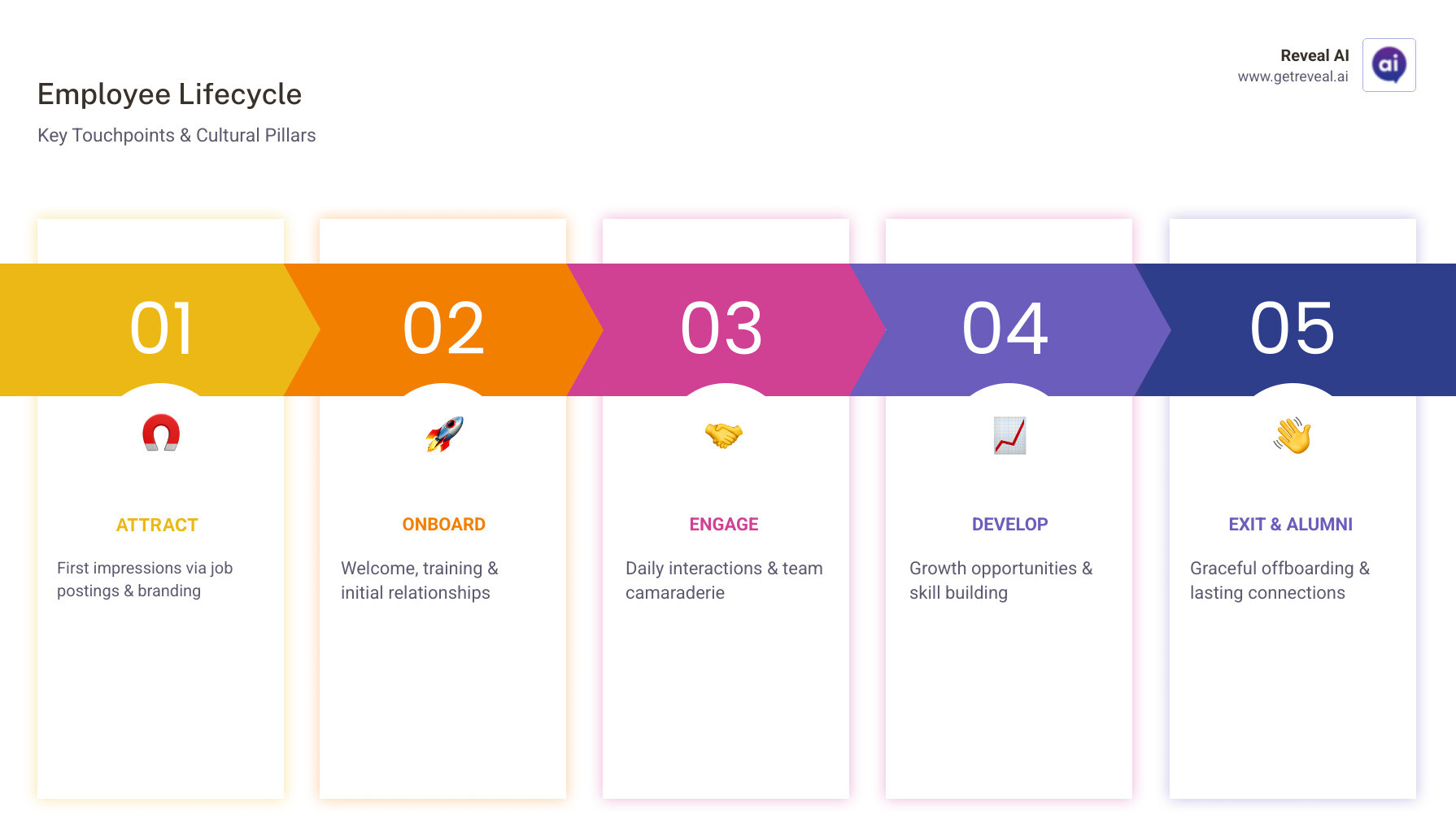
Basic employee experience glossary for researchers:
To decode the employee experience, researchers must look past surface-level perks and analyze the foundation of the relationship between a worker and their workplace. A positive EX is built on six pillars: trust, credibility, respect, fairness, camaraderie, and pride. When these are strong, employees become stakeholders in the business's success.
For research professionals, the strategic value lies in shifting from reactive data to proactive insights. Instead of relying on exit interviews, a focused EX research strategy allows analysts to capture what people see and feel in real-time. This identifies "moments that matter"—critical junctions where an employee’s perception of the brand is solidified.
While often used interchangeably, the distinction between "engagement" and "experience" is vital for accurate data modeling. Employee experience is the input; employee engagement is the output.
FeatureEmployee Experience (EX)Employee EngagementScopeHolistic journey from hire to retirePoint-in-time emotional commitmentFocusThe environment, tools, and cultureThe employee's level of effort and passionResponsibilityLeadership and organizational designThe employee's response to their workGoalTo design a better workplace ecosystemTo improve immediate productivity
Researchers break down the EX lifecycle into seven stages to identify specific touchpoints for qualitative analysis:
Focusing on employee experience is a bottom-line necessity. Gallup research shows that companies with high engagement are 23% more profitable. For researchers, this correlation is clear: reduced turnover (saving 50-60% of annual salaries), higher productivity, and a significant boost in brand advocacy and operational excellence.
Measuring the employee experience requires a culture of "continuous feedback" and sophisticated qualitative tools. Traditional annual surveys are often too slow for modern product and research teams to act upon.

Modern research firms are moving toward real-time employee feedback to identify trends as they happen. This involves pulse surveys and open-ended feedback channels that prioritize the "why" over the "what."
Researchers must optimize three primary environments to improve EX:
The biggest hurdle in EX research is the "Qualitative Gap." Quantitative ratings don't explain why an employee feels a certain way. To bridge this, researchers need the stories and specific examples found in qualitative data.
This is where an AI-powered qualitative research platform like RevealAI becomes indispensable. While legacy survey tools or generic AI bots may hallucinate or lose emotional nuance, RevealAI is built for research-grade integrity:
Understanding the role of AI in research is critical for organizations that want to move at the speed of the market without sacrificing truth.
The future of employee experience is personalized. Just as product teams tailor UX, the future workplace will use data to tailor learning paths and communication. We are moving toward the "Human-Powered Enterprise"—balancing business outcomes with human performance through "emotional shaping."
For research teams looking to lead, qualitative workforce research is the foundation. By using RevealAI, you ensure your EX strategy is built on trust, verifiable data, and deep human insight.
Decoding the employee experience meaning reveals that it is a comprehensive framework for business success, not just a HR buzzword. By focusing on the entire lifecycle and prioritizing trust, technology, and culture, organizations can unlock unprecedented levels of productivity.
For market researchers and product teams, the challenge lies in moving beyond surface-level metrics to discover the qualitative "why" behind employee sentiment. Leveraging a "Trust First" AI research platform allows analysts to gain the speed they need without losing the human nuance that makes the employee experience so powerful. The future of work is human-powered; RevealAI ensures you have the tools to analyze with precision and integrity.